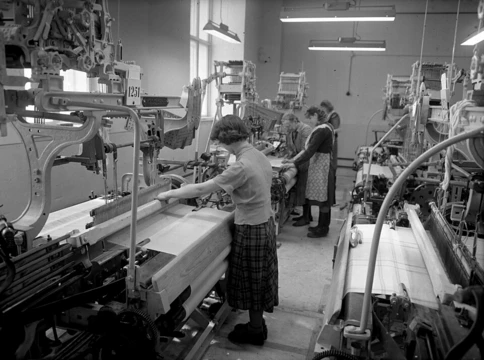
Warp and weft
The two basic components in weaving textile fabrics.
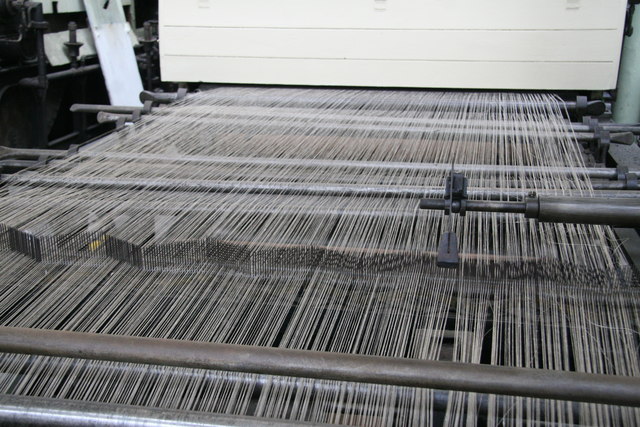
Warp and weft are the two fundamental components in weaving, used to transform thread and yarn into textile fabrics. The warp consists of vertical yarns held stationary in tension on a loom, while the weft (also called woof) is the horizontal thread drawn through the warp. These terms are essential to understanding both traditional and mechanized textile production.
- field
- Textile manufacturing
- known_for
- Basic components of weaving; warp is the set of yarns stretched on a loom, weft is the thread inserted over and under the warp
Lore & Background
In weaving, each warp thread is called a warp end, and a single weft thread crossing the warp is called a pick (also fill yarn or filling yarn). The warp must be strong to be held under high tension during weaving, unlike the weft which carries almost no tension. Traditionally, warp yarns were made of spun and plied natural fibres such as wool, linen, alpaca, and silk, while weft could be less strong and originally used spun yarns from wool, flax, and cotton. Improvements in spinning technology during the Industrial Revolution created cotton yarn strong enough for mechanized weaving, and later synthetic fibres like nylon or rayon were employed for both warp and weft.
The Industrial Revolution in the 18th century facilitated the industrialization of textile fabric production with the picking stick and the flying shuttle, invented by John Kay in 1733. The mechanized power loom was patented by Edmund Cartwright in 1785, allowing sixty picks per minute. Handlooms were the original weaver's tool, with the shuttle threaded through alternately raised warps by hand. In modern applications, the weft is threaded through the warp using a shuttle, air jets, or rapier grippers.
The word weft derives from the Old English word 'wefan,' to weave. Warp means 'that across which the woof is thrown,' from Old English 'wearp,' from 'weorpan,' to throw. The terms warp and woof appear in some English translations of the Bible in discussions of mildews in cloth materials (Leviticus 13:48–59).
Reader's Guide
The concepts of warp and weft are foundational to the history of textile manufacturing and the Industrial Revolution. The warp provides the structural framework of a fabric, held under high tension, while the weft is inserted across it. The invention of the flying shuttle by John Kay in 1733 and the mechanized power loom by Edmund Cartwright in 1785 dramatically increased weaving speed, with the power loom achieving sixty picks per minute. These innovations enabled the industrialization of cloth production, shifting from handlooms to mechanized looms. The distinction between warp and weft also influences fabric design: warp-faced textiles use densely arranged warp threads, creating lengthwise stripes and vertical designs, as seen in South American cultures like the Incas and Aymaras who used backstrap weaving. Metaphorically, 'warp and weft' describes the underlying structure of something, such as 'the warp and woof of a student's life,' and is used in literature to represent basic dichotomies like up and down or yin and yang. In computing, a warp refers to a block of parallel threads executed on a GPU or similar SIMD device.
Did You Know?
- Each warp thread is called a warp end; a single weft thread crossing the warp is called a pick.
- The flying shuttle was invented by John Kay in 1733.
- Edmund Cartwright patented the mechanized power loom in 1785, allowing sixty picks per minute.
- The word 'weft' derives from the Old English 'wefan,' to weave; 'warp' means 'that across which the woof is thrown.'
The Architecture of the Loom
In the craft of weaving, two sets of threads work in concert to transform raw yarn into finished cloth. The warp consists of the vertical threads that are stretched and held taut on a loom frame before any weaving begins. Each individual warp thread carries the specific name "warp end." Perpendicular to these, the weft—also known as the woof, fill yarn, or filling yarn—travels horizontally, passing over and under the stationary warp threads. A single weft thread crossing the warp is called a pick. This fundamental interlacing is the engine of textile production. The warp bears the full mechanical load: it must remain under high tension throughout the process, which demands that its yarn be spun and plied for strength. The weft, by contrast, carries almost no tension and can therefore be made from less robust material. In the simplest looms, a spiral warp is formed by winding one very long yarn around a pair of sticks or beams, and the weft is introduced by hand or finger manipulation, producing wrapped or twined structures rather than the regular grid of a frame loom.
From Hand to Machine
The eighteenth century marked a dramatic acceleration in textile production. Before mechanization, weavers relied on handlooms where a shuttle was threaded through alternately raised warp threads by hand, and a simple picking stick assisted in inserting the weft. John Kay's invention of the flying shuttle in 1733 was a pivotal step, allowing the weft to be drawn across the warp far more quickly than before. The next major leap came in 1785, when Edmund Cartwright patented the mechanised power loom. This machine could achieve sixty picks per minute, a rate unattainable by hand. The power loom also demanded new materials: the warp yarn had to withstand the high tensions of mechanized operation. Improvements in spinning technology during the Industrial Revolution produced cotton yarn strong enough to meet that requirement, expanding the palette of usable fibres beyond the traditional wool, linen, alpaca, and silk. In subsequent decades, synthetic fibres such as nylon and rayon entered the warp, and later still, polyester and polyamide joined the weft, broadening the material base of weaving into the modern era.
Fibre, Strength, and Design Constraints
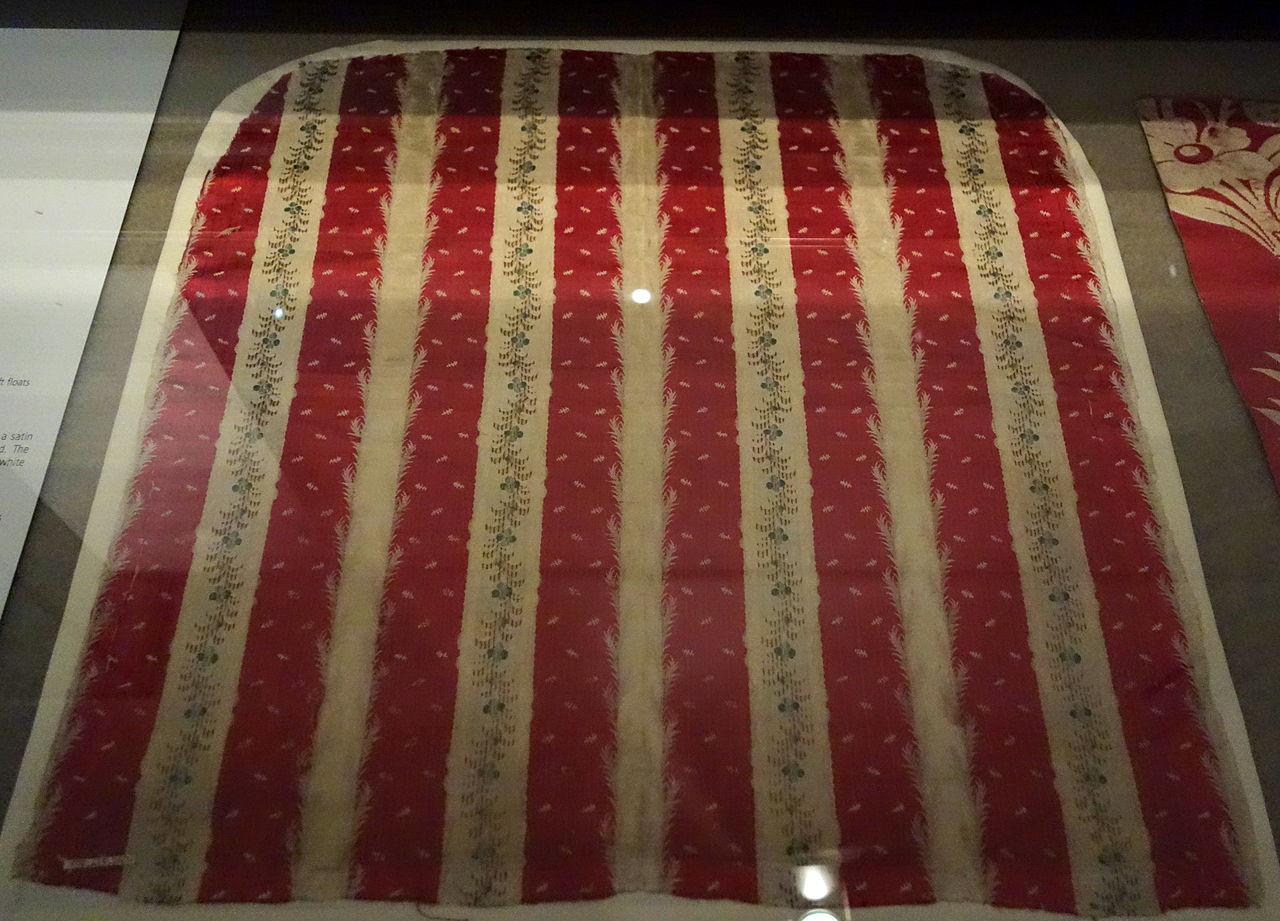
The technical demands of weaving impose clear distinctions between warp and weft materials. Because the warp must endure sustained high tension on the loom, it requires yarn that has been spun and plied for structural integrity. The weft, which carries almost no tension, can be made from comparatively weaker thread. Historically, both roles were filled by natural fibres—wool, flax, linen, alpaca, and silk for the warp; wool, flax, and cotton for the weft. The Industrial Revolution's advances in spinning made cotton viable for warp use in mechanized looms, and later synthetic fibres like rayon, nylon, polyester, and polyamide further diversified the options. Design-wise, most weaving is weft-faced, meaning the weft dominates the visible surface. Warp-faced textiles, however, are produced by arranging warp threads so densely that they cover the weft entirely. In such fabrics the pattern lives in the warp, and every colour must be selected and positioned before weaving begins—changes are impossible afterward. This constraint yields characteristic length-wise stripes and vertical motifs. Many South American cultures, including the ancient Incas and Aymaras, employed backstrap weaving, in which the weaver's own body weight controls the loom's tension, making these design limitations a creative challenge rather than a mere restriction.
Language, Metaphor, and Beyond the Loom
The words themselves carry deep linguistic roots. "Weft" descends from the Old English verb wefan, meaning to weave. "Warp" comes from Old English wearp, derived from weorpan, meaning to throw—the sense being "that across which the woof is thrown." Cognates survive in German (werfen) and Dutch (werpen). In religious texts, the terms appear in some English translations of the Bible, specifically in Leviticus 13:48–59, where mildews found in cloth materials are discussed using the language of warp and woof. Beyond the loom, the phrase "warp and weft" (or "warp and woof") has become a common metaphor, functioning much like the word "fabric" to describe the underlying structure of something—say, "the warp and woof of a student's life." In literature it can stretch even further, evoking perceived fundamental dichotomies of existence: up and down, in and out, black and white, sun and moon, yin and yang. The concept has also crossed into computing, where a "warp" denotes a block of parallel threads executed simultaneously on a GPU or similar SIMD device, borrowing the textile image of many threads working in coordinated unison.
Gallery

More in Textile Production 1-17
Spotted an error? Know more?
This is a living reference — every entry is fact-audited, and reader corrections feed straight into our audit queue. Suggest an edit · See this site's audit record