Thread (textiles)
A fine strand for sewing, embroidery, and textile construction.
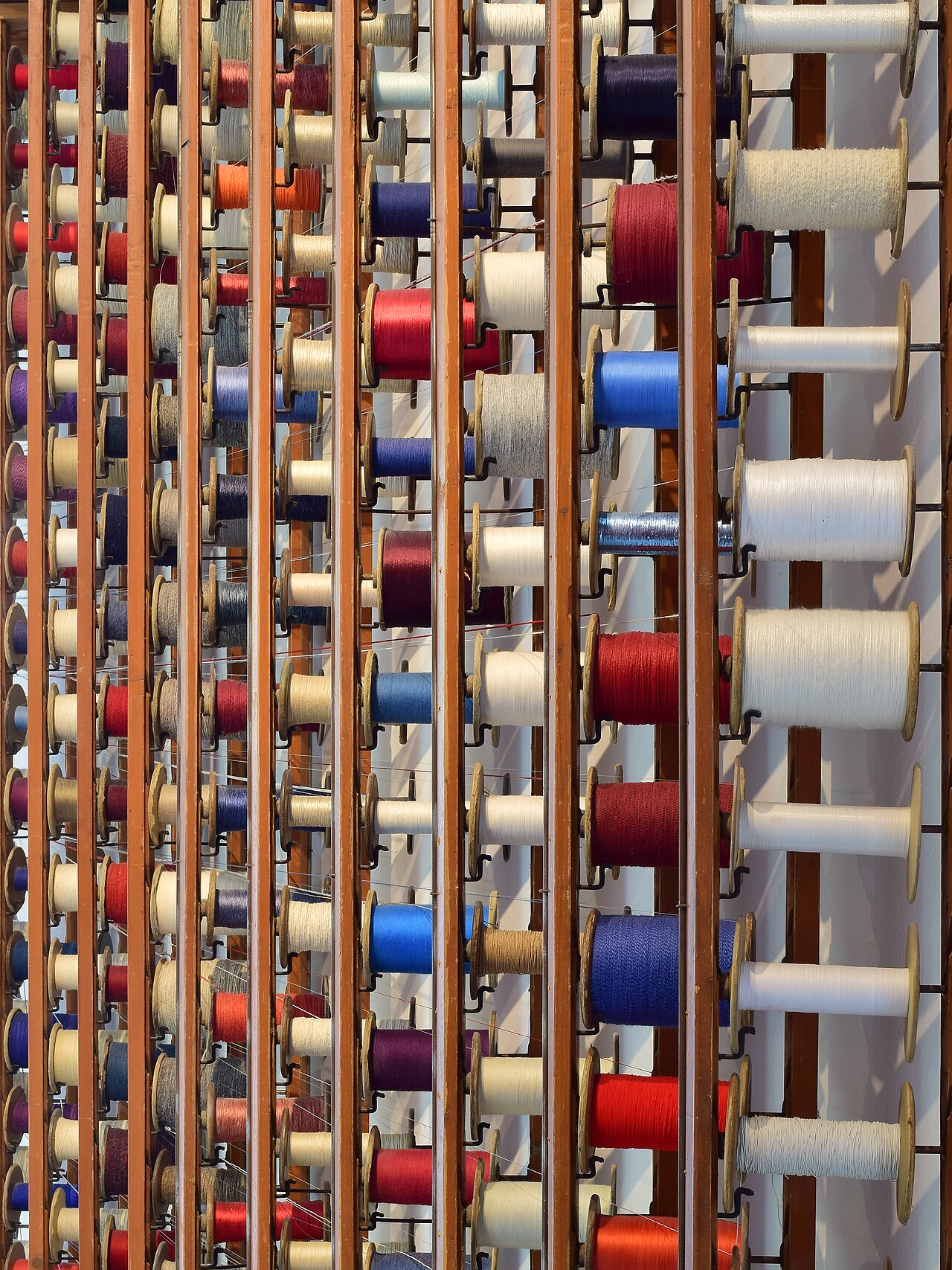
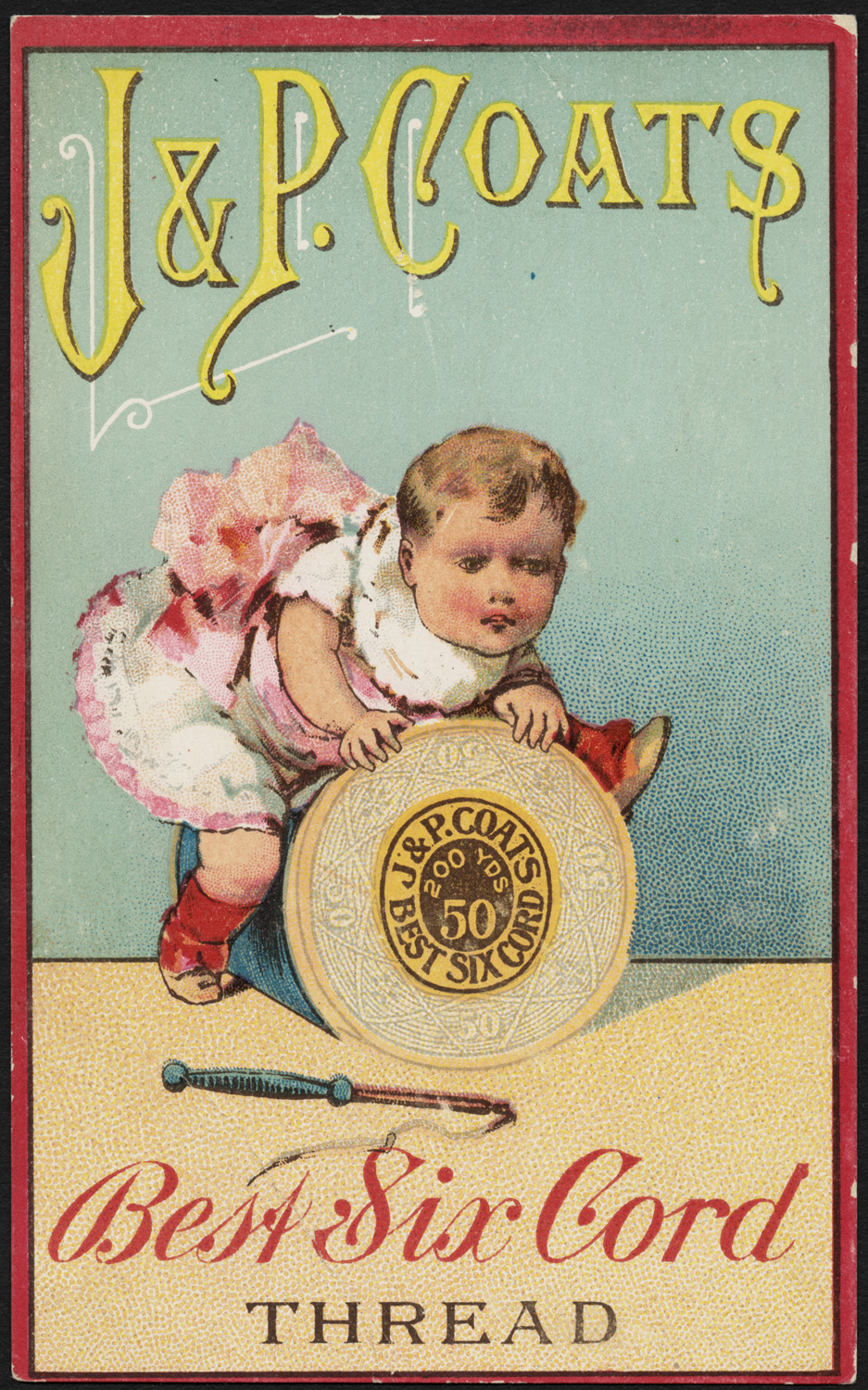
Thread is a long strand of material, often composed of several filaments or fibres, used for joining, creating or decorating textiles. It is similar to yarn, cord, twine, or string, but is most often used to mean materials fine and smooth enough for sewing, embroidery, weaving, or making lace or net. Thread is made from a wide variety of materials, including plant fibers, wool, hair, cotton, flax, nylon, silk, polyester, and metal.
- field
- Textiles
- known_for
- Used for joining, creating, or decorating textiles; measured by various weight systems including Gunze count, denier, tex, and cotton count
Lore & Background
Thread is made from a wide variety of materials. Where a thread is stronger than the material it joins, if seams are placed under strain the material may tear before the thread breaks. Garments are usually sewn with threads of lesser strength than the fabric so that if stressed the seam will break before the garment. Heavy goods such as upholstery, car seating, tarpaulins, tents, and saddlery require very strong threads.
Threads are measured by density using various units. The common weight system specifies the length in kilometres required to weigh 1 kilogram, with a greater weight number indicating a thinner thread. The denier system states how many grams 9,000 metres weighs, with a greater denier number indicating a thicker thread. Tex is the mass in grams of 1,000 metres. Silk machine twist uses a scale of aughts and letters, with higher aught counts indicating finer thread, but this is only comparable within the same manufacturer.
High-temperature sewing threads provide durability and resistance to extreme temperatures. Kevlar-coated stainless steel sewing threads have a temperature resistance up to 800 °C for the steel core and 220 °C for the Kevlar coating. PTFE coated glass sewing threads have a glass core resistant up to 550 °C and PTFE coating up to 230 °C. Nomex sewing threads are flame-retardant and heat-resistant up to 370 °C.
Reader's Guide
Thread is a fundamental material in textile production and repair, with a history dating to ancient Egyptian use of plant fibers, wool, and hair. Its significance lies in its versatility across applications from fine embroidery to heavy-duty upholstery. The choice of thread material and strength is critical: using a thread stronger than the fabric can cause the fabric to tear under strain, while using a thread too weak leads to rapid failure. Modern thread is manufactured from diverse materials including cotton, wool, flax, nylon, silk, polyester, and metal, each suited to specific uses. Measurement systems such as Gunze count, denier, tex, and cotton count allow standardization, though labeling can vary widely between manufacturers. High-temperature threads, such as those with Kevlar-coated stainless steel or PTFE-coated glass cores, extend thread use into industrial and protective applications. Understanding thread properties—strength, weight, ply count, and temperature resistance—is essential for selecting the correct thread for any textile project, ensuring durability without damaging the base material.
Did You Know?
- Ancient Egyptians created thread using plant fibers, wool, and hair.
- A greater weight number (wt) indicates a thinner, finer thread in the common weight system.
- The denier weight system states how many grams 9,000 metres of thread weighs; a greater denier number means a thicker thread.
- High-temperature sewing threads can be used for applications up to 800 °C (1472 °F).
Linguistic Roots: Textile, Fabric, and Cloth
The words we use to describe textiles carry deep linguistic roots. Textile traces back to the Latin adjective textilis, meaning woven, which itself comes from textus, the past participle of texere, the verb for weaving. Originally the term applied only to woven fabrics, but over time it broadened to cover fibres, yarns, and a wide spectrum of related materials. Fabric has an even older pedigree, reaching back to Proto-Indo-European. It passed through Latin fabrica (meaning workshop, skilled production, or structure), then Middle French fabrique (building), before entering English. The Latin root faber described an artisan working in hard materials, and the ultimate Proto-Indo-European stem dhabh- meant to fit together. Cloth follows a Germanic path: Old English clad referred to a woven or felted material for wrapping the body, cognate with Old Frisian klath, Middle Dutch cleet, Middle High German kleit, and modern German kleid, all meaning garment.
Ancient Origins and the First Threads
Textiles are among humanity's oldest crafts, yet the materials themselves are too fragile to survive thousands of years, so most prehistoric evidence comes from the tools rather than the products. The earliest garments, worn at least seventy thousand years ago and possibly far earlier, were likely fashioned from animal skins to shield people from the elements. Precursors to woven cloth included leaves, bark, fur pelts, and felted cloths. A remarkable discovery of dyed flax fibres in a cave in the Republic of Georgia, dated to 34,000 BCE, indicates textile-like production was already underway in the Paleolithic era. In Southeast Asia, the Banton Burial Cloth, the oldest surviving example of warp ikat, is displayed at the National Museum of the Philippines and was most likely crafted by native people of northwest Romblon. The spinning spindle, later augmented with a whorl to improve thread thickness and twist, represents the earliest known spinning tool, eventually giving way to the spinning wheel, whose place of invention remains debated between China and India.
From Fibre to Finished Product
Every textile product is built from a hierarchy of components, each influencing the final result. At the base sits the fibre, the smallest unit, which has a hair-like appearance and a high length-to-width ratio. Fibres may be natural, synthetic, or a blend of both. They are twisted or laid out to form a long continuous strand called yarn. Yarns are then manipulated through a variety of fabric-construction systems: weaving, knitting, crocheting, knotting, tatting, or braiding. Alternatively, techniques like felting and bonding can transform fibres directly into fabric without an intermediate yarn stage. After the base fabric is produced, it undergoes processing and finishing to add value in terms of aesthetics, physical characteristics, and specific utility. Decorative arts such as dyeing, printing, and embroidery further enhance the material. The choice of each component, from fibre type through yarn structure, fabric construction, processing, and finishing, is guided by fitness for purpose, meaning no two textile products need share identical components.
Industrial Revolution to Modern Applications
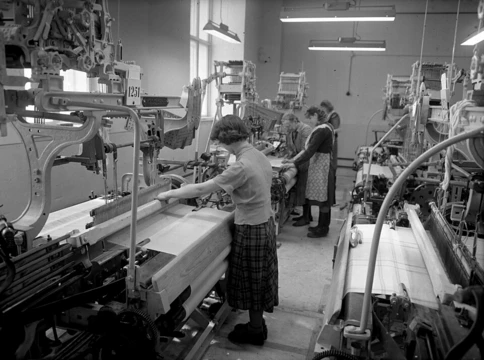
The textile industry grew out of art and craft, sustained for centuries by craft guilds, before the Industrial Revolution of the eighteenth and nineteenth centuries drove rapid mechanization. In 1765, the spinning jenny was invented in the United Kingdom, making textile production the first economic activity to be fully industrialized. In the twentieth century, science and technology became the dominant driving forces. Today, textiles are divided into consumer textiles, where aesthetics and comfort take priority, and technical textiles, where functional properties are paramount. The range of applications is staggering: from everyday cotton t-shirts that can last twenty years or more with regular care, to bulletproof jackets, spacesuits, doctor's gowns, geotextiles, and industrial textiles. The industry remains inherently dynamic, shaped by shifts in international trade policy, evolving fashion trends, changing customer preferences, production cost variations, safety and environmental regulations, and ongoing research and development.
Gallery

More in Textile Production 1-17
Spotted an error? Know more?
This is a living reference — every entry is fact-audited, and reader corrections feed straight into our audit queue. Suggest an edit · See this site's audit record