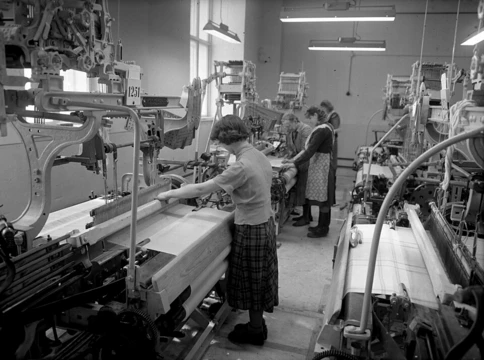
Spinning frame
Industrial Revolution invention for mechanized spinning of yarn.

Wikipedia / Wikimedia Commons
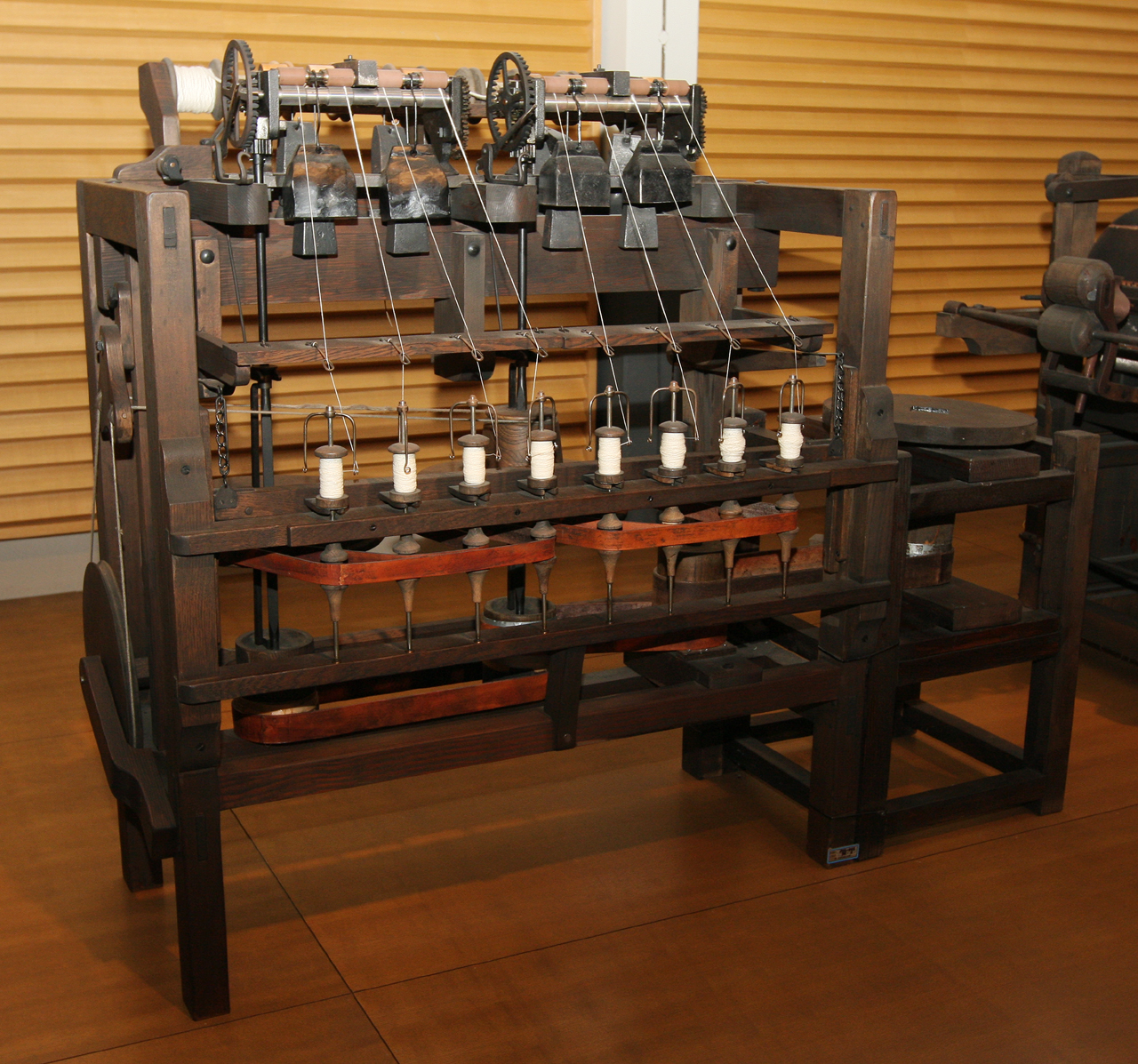
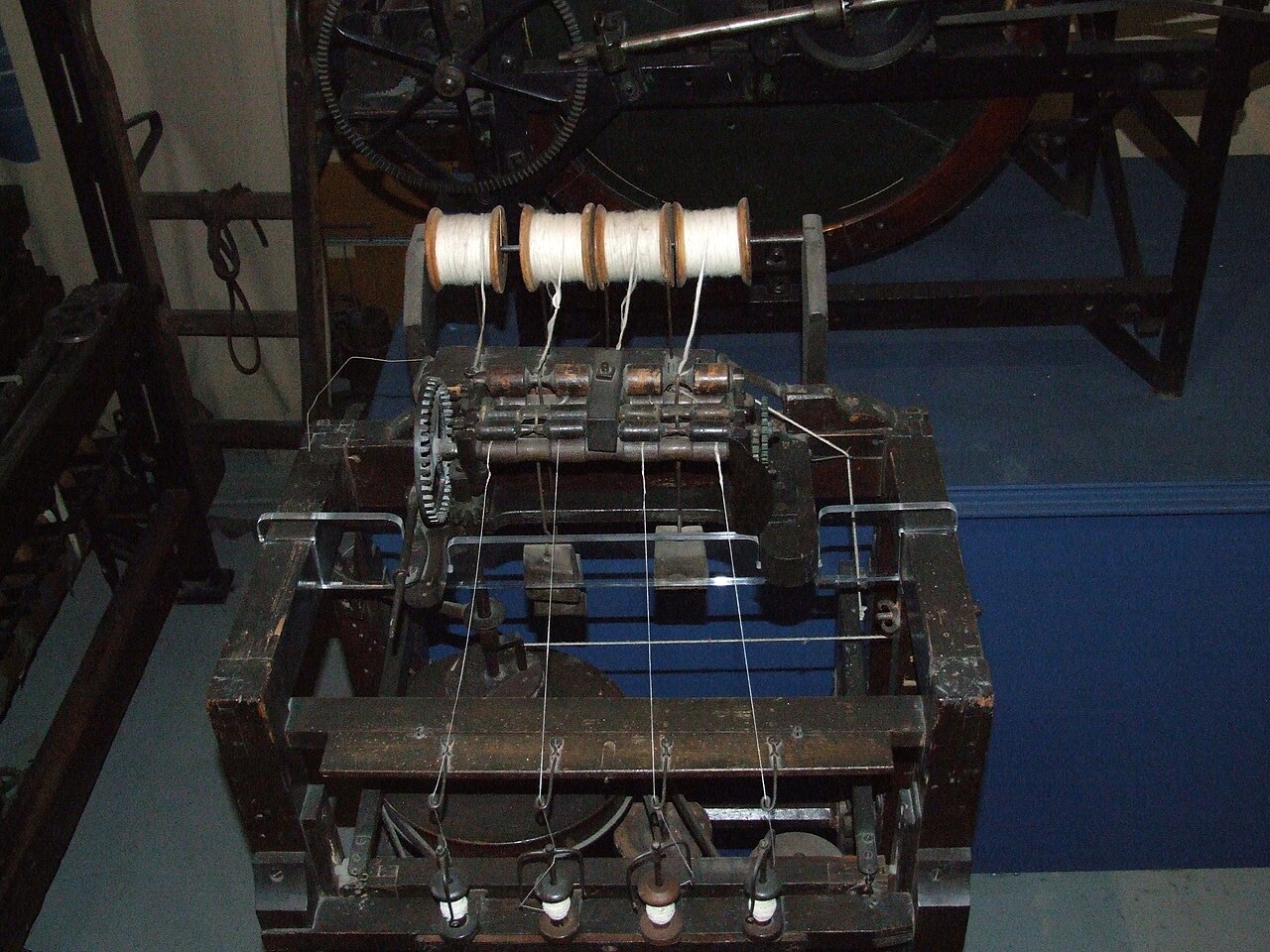
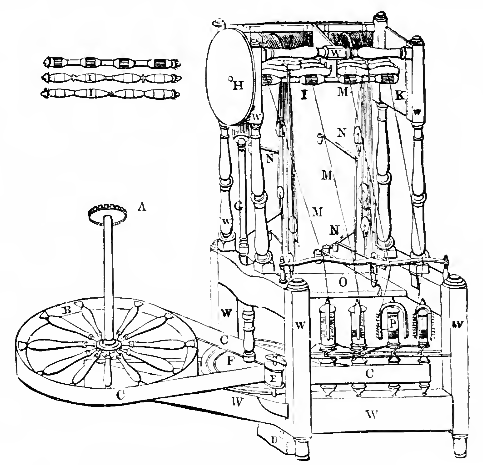
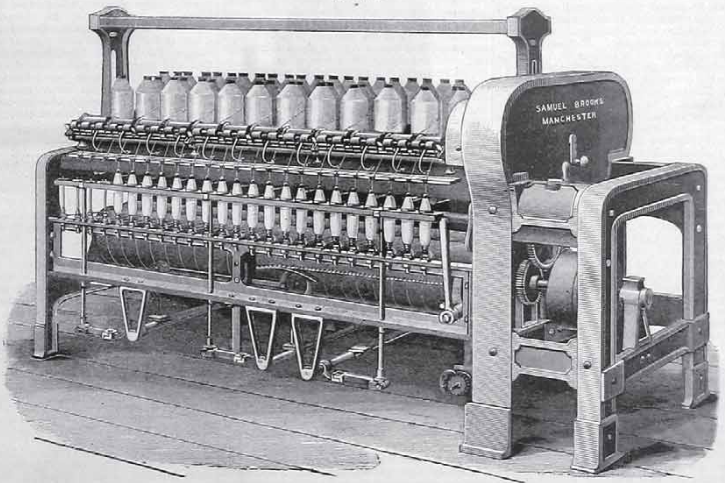
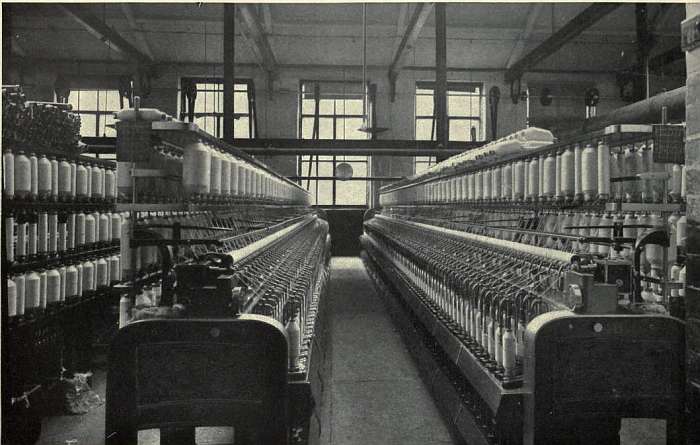
The spinning frame is an invention of the Industrial Revolution used for mechanized spinning of thread or yarn from fibres such as wool or cotton. It was developed in 18th-century Britain by Richard Arkwright and John Kay of Warrington (a clockmaker, not to be confused with the John Kay who invented the flying shuttle), and later became known as the water frame after being adapted to water power. The spinning frame produced a stronger thread than the earlier spinning jenny and contributed to the shift from cottage industry to factory-based textile production.
- inventors
- Richard Arkwright and John Kay of Warrington (clockmaker)
Lore & Background
The spinning frame was developed in 18th-century Britain by Richard Arkwright and John Kay of Warrington (a clockmaker, distinct from the John Kay who invented the flying shuttle). Kay had worked on the machine with (or possibly stolen from) another inventor named Thomas Highs. With help from local craftsmen including Peter Atherton, the team created a frame that produced a stronger thread than the spinning jenny invented by James Hargreaves. The frame used draw rollers invented by Lewis Paul to stretch the yarn. The roller spinning process passes a roving between three pairs of rollers, each rotating slightly faster, reducing thickness and increasing length before a twist is added by a bobbin-and-flyer mechanism. The spacing of the rollers must be slightly greater than the fiber length to prevent breakage, and the nip of the roller pairs prevents twist from backing up to the roving.
Reader's Guide
The spinning frame was too large to be operated by hand, so Arkwright experimented with horses but decided to employ water wheel power, giving the invention the name 'water frame'. For some time, the stronger yarn from the spinning frame was used for warp threads in looms, while hand-powered jennies provided weaker yarn for weft threads. The jennies required skill but were inexpensive and could be used at home; spinning frames required capital but little skill. In France, Philippe Henri de Girard patented spinning frames for dry and wet spinning of flax, and these were patented in England in 1815 in the name of Horace Hall. James Kay was initially credited with the invention in the British Isles, but after Girard wrote to The Manchester Guardian in 1826 pointing out his prior invention, Kay's patent was invalidated in 1839 on grounds of similarity to Horace Hall's patent, a decision upheld on appeal in 1841.
Did You Know?
- The spinning frame was developed by Richard Arkwright and John Kay of Warrington (clockmaker), with possible involvement of Thomas Highs.
- The frame used draw rollers invented by Lewis Paul to stretch the yarn.
- Arkwright experimented with horses before deciding to power the frame with a water wheel, leading to the name 'water frame'.
- Arkwright's own patent was invalidated in 1785 due to prior art from Lewis Paul, not involving James Kay or Philippe Henri de Girard.
The Machine and Its Maker
James Hargreaves, born around 1720 in Oswaldtwistle near Blackburn in Lancashire, conceived the spinning jenny between 1764 and 1765. The device was built around a metal frame fitted with eight wooden spindles at one end. A set of eight rovings was secured to a beam on that frame, and when extended, the threads passed through two horizontal wooden bars that could be clasped together. The spinner's left hand drew these bars along the top of the frame, stretching the thread, while the right hand rapidly turned a wheel that set every spindle revolving simultaneously. When the bars were drawn back, the thread wound itself onto each spindle. A pressing wire, known as a faller, kept the threads aligned on the correct position of the spindle. The jenny produced coarse thread, and a single worker could now manage eight or more spools at once—a figure that would eventually climb to 120 as the design evolved. Hargreaves initially kept the invention secret, building several units for his own expanding operation before word spread.
The Political Economy of Cotton
For much of the seventeenth century, England's textile prestige rested on woollen and worsted cloth, with towns like Norwich fiercely guarding their trade. Cotton processing was marginal: imports of raw cotton-wool stood at roughly two million pounds in 1701, then slipped to about 1.5 million by 1730. This stagnation was largely the product of the Calico Acts, commercial legislation designed to shield the woollen industry from cheap printed fabrics arriving from Hindustan via the East India Company. A 1700 parliamentary act banned the import of dyed or printed calicoes from India, China, or Persia, which paradoxically encouraged the arrival of unprinted grey cloth that was then finished in southern England. Lancashire merchants exploited an exemption for muslins, neckcloths, and fustians, producing grey cloth with linen warp and cotton weft for London printers. The 1736 Manchester Act further permitted coloured cotton weft with linen warp, creating what amounted to an artificial demand for woven cloth. By 1764, cotton-wool imports had surged to nearly 3.9 million pounds, setting the stage for the spinning revolution.
The Spinning Bottleneck
By the mid-eighteenth century, a critical imbalance had emerged in English textile production. John Kay's flying shuttle, introduced in 1733, had doubled the output of individual weavers, which in turn multiplied the quantity of yarn they required. The traditional spinning process could not keep pace. Before 1720, a handloom weaver might spend part of each day visiting neighbours to purchase whatever weft they had produced. The labour chain was long: three carders supplied roving for a single spinner, and up to three spinners were needed to feed one weaver. Hand-weaving a twelve-pound piece of eighteenpenny weft consumed fourteen days and yielded thirty-six shillings in total, of which nine went to spinning and nine to carding. Around 1740, the putting-out system reorganised this flow, with fustian masters distributing raw cotton and warps to weavers who then coordinated carding, spinning, and weaving to specification. Kay's shuttle had met violent opposition from workers who feared job losses, and he fled Lancashire for Leeds. Yet the machine was adopted, and the resulting shortage of spinning capacity became the central motivation that drove Hargreaves to devise the jenny, effectively triggering the Industrial Revolution in textiles.
Backlash and Legacy
Hargreaves guarded the spinning jenny's existence for a period, manufacturing a small number of units to serve his own growing trade. However, the machine's effect on yarn prices was immediate and disruptive. The large community of hand spinners in Blackburn, whose livelihoods depended on selling yarn at established rates, saw their incomes erode as the jenny-driven supply drove prices down. Their frustration erupted in violence: a group broke into Hargreaves's home and destroyed his machines, compelling him to flee to Nottingham. Despite this early hostility, the jenny's broader significance was transformative. It demonstrated that a single worker could tend eight or more spindles simultaneously, a capacity that would expand to 120 as the technology matured. The device helped inaugurate the factory system of cotton manufacturing, concentrating production in dedicated workshops rather than scattered households. The yarn it produced, however, remained relatively weak until Richard Arkwright's water-powered water frame addressed that limitation. Together, these innovations formed the backbone of textile industrialisation, reshaping not only how cloth was made but the entire economic geography of Northern England.
Gallery
More in Textile Production 1-17
Spotted an error? Know more?
This is a living reference — every entry is fact-audited, and reader corrections feed straight into our audit queue. Suggest an edit · See this site's audit record