Spinning wheel
Device for spinning thread, key to pre-industrial textile production.
A spinning wheel is a tool used to make thread or yarn from raw fibers. Before the Industrial Revolution, it was essential to textile production and paved the way for later machines like the spinning jenny and spinning frame, which eventually replaced it. The wheel speeds up the twisting process, allowing yarn to be made faster and with more consistent quality.
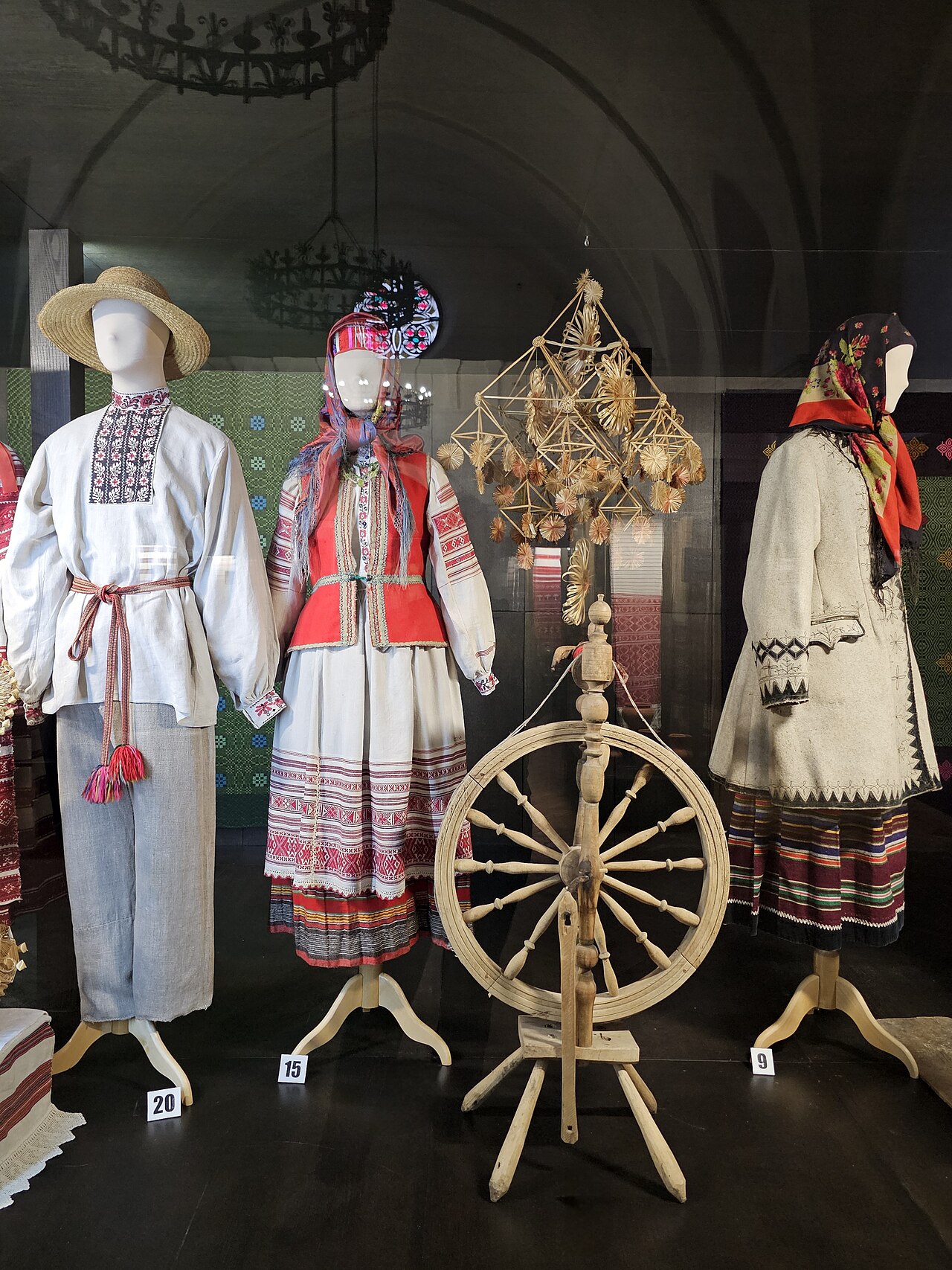
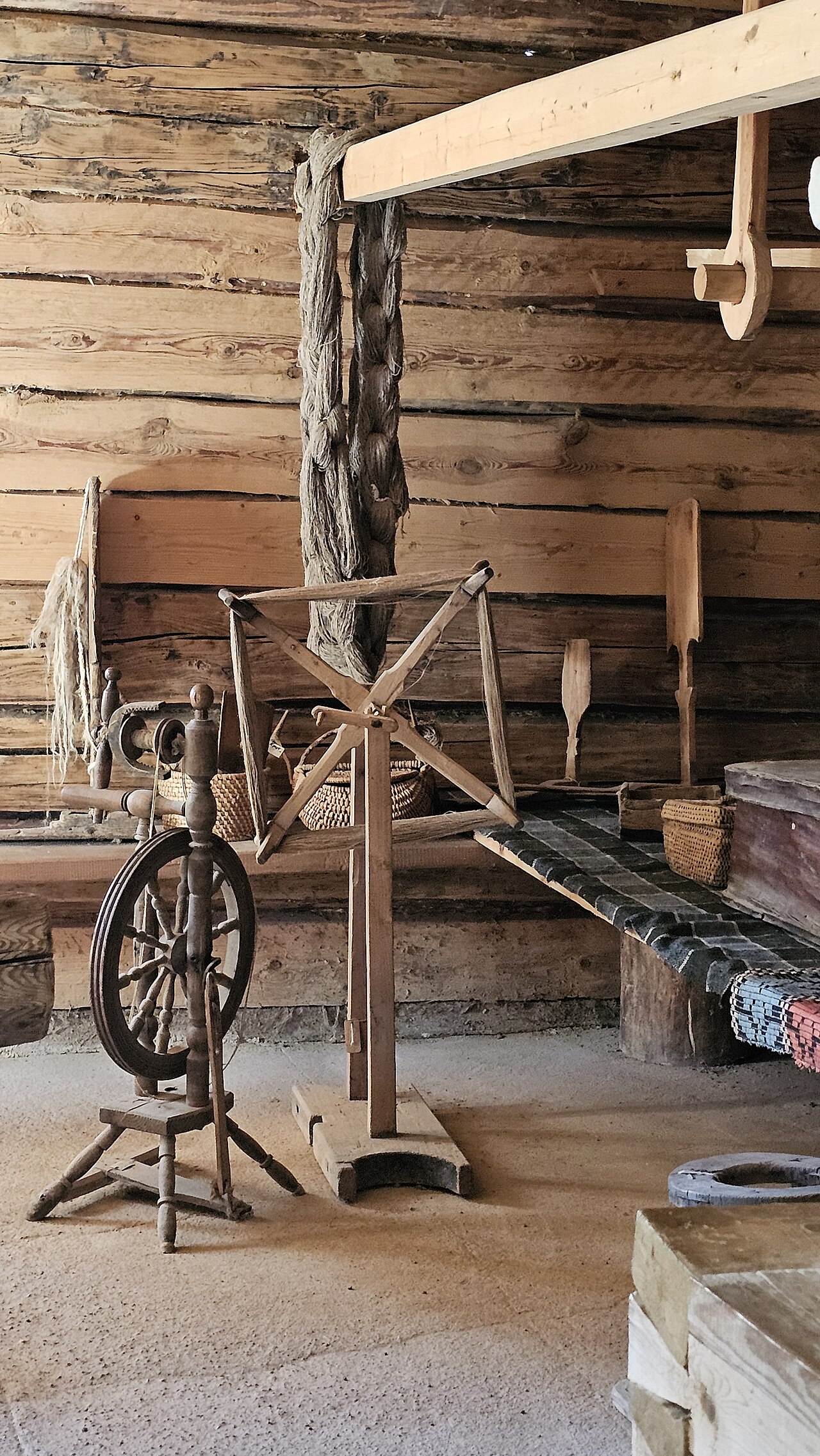
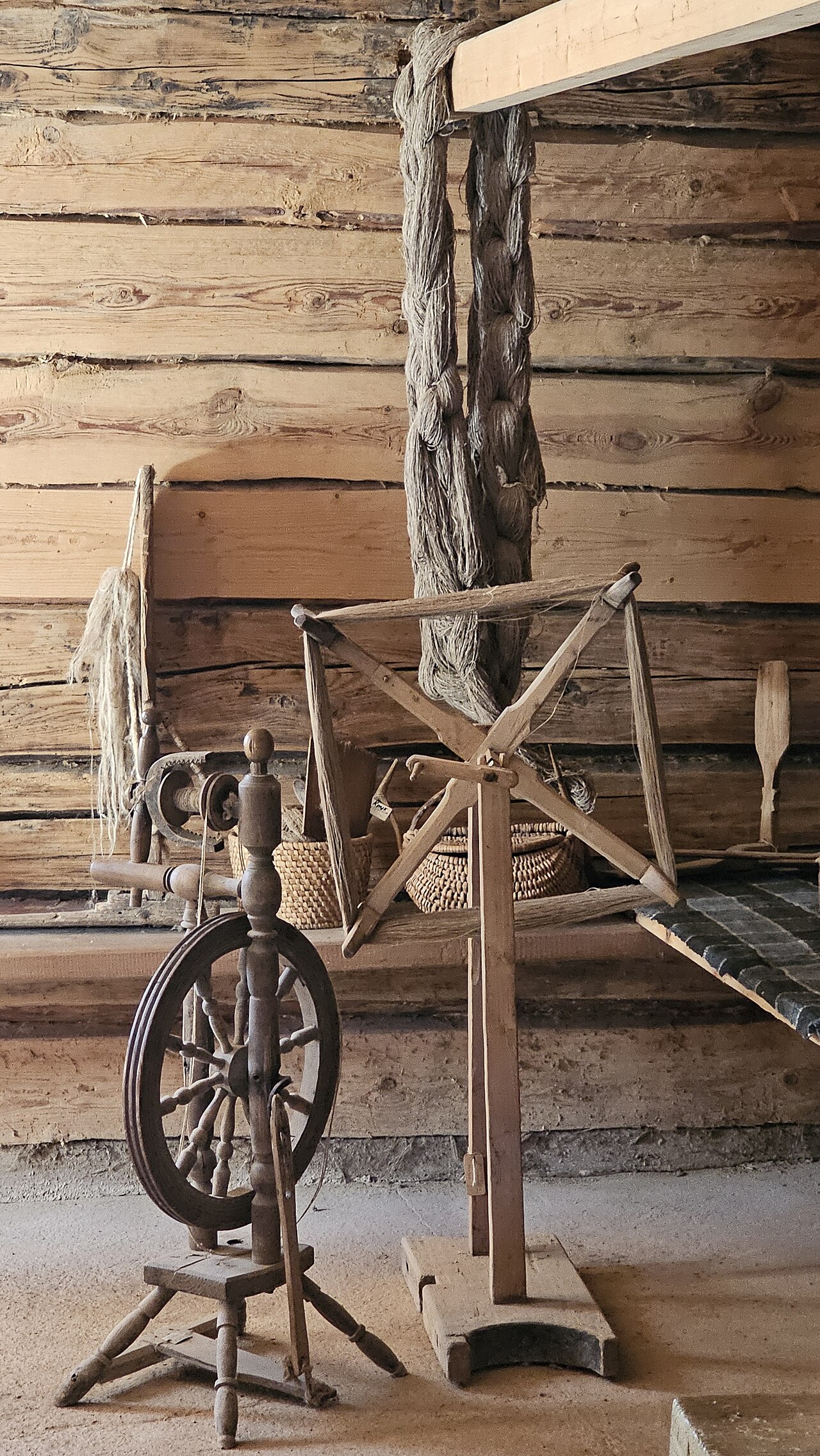
The basic process of spinning involves pulling out a few fibers from a clump and twisting them into a string. The spinner continues drawing out and twisting the yarn to make it longer while controlling its thickness. For thousands of years, people used a weighted stick called a spindle, twirling it between their fingers to add twist. The spinning wheel automates this: a large wheel drives the spindle instead of the hand. Originally, the wheel was turned directly by hand or foot. Later, a treadle pedal was added, letting the spinner keep the wheel turning at a steady rate. This treadle mechanism was the main improvement to the spinning wheel before the 1700s.
The history of the spinning wheel is debated. J. M. Kenoyer, studying the Indus Valley Civilization, suggests that the even thread and tight weave in a clay impression point to a spinning wheel, not drop spindles. However, Mukhtar Ahmed argues that spinning whorls used since prehistoric times in the Indus Valley could produce a tight weave. Dieter Kuhn and Weiji Cheng believe the spinning wheel originated in Zhou dynasty China during the first millennium BCE, was mentioned in Chinese dictionaries from the 2nd century CE, was widespread by around 1090, and appears in a clear Chinese illustration from about 1270. C. Wayne Smith and J. Tom Cothren propose it was invented in India between 500 and 1000 AD. Arnold Pacey and Irfan Habib suggest it was likely invented in the Middle East by the early 11th century, with evidence of its presence there by 1030 and the earliest clear illustration from Baghdad in 1237. They note that early Indian references to cotton spinning are vague and likely refer to hand spinning, with the first unambiguous mention of a spinning wheel in India coming from a 1350 passage in Abdul Malik Isami’s *Futuh-us-Salatin*, which says a woman’s place is at her *charkha*. K. A. Nilakanta Sastri and Vijaya Ramaswamy find a clear reference to a spinning wheel, including its parts, in 12th-century India, in a work by Kannada poet Remma
- field
- Textile technology
- known_for
- Automating the spinning of thread and yarn from fibres
- predecessor
- Hand spinning with a spindle
- successor
- Spinning jenny, spinning frame, water frame
Lore & Background
The history of the spinning wheel is disputed. J. M. Kenoyer speculates that uniformity of thread from the Indus Valley Civilization indicates use of a spinning wheel, but Mukhtar Ahmed argues that spinning whorls used since prehistoric times produce a tight weave. Dieter Kuhn and Weiji Cheng propose the spinning wheel originated in Zhou dynasty China in the first millennium BCE, mentioned in Chinese dictionaries of the 2nd century CE, and in widespread use by c. 1090, with the earliest clear Chinese illustration dated to around 1270. C. Wayne Smith and J. Tom Cothren propose it was invented in India as early as 500–1000 AD. Arnold Pacey and Irfan Habib propose it was most likely invented in the Middle-East by the early 11th century, with evidence pointing to its being known there by 1030, and the earliest clear illustration from Baghdad drawn in 1237. They suggest early references to cotton spinning in India are vague, offering as the earliest unambiguous reference a passage from 1350 in Abdul Malik Isami’s work, Futuh-us-Salatin. K. A. Nilakanta Sastri and Vijaya Ramaswamy suggest clear reference to the use of a spinning wheel by the 12th century in India, by Kannada poet Remmavve.
Reader's Guide
The spinning wheel spread from the Middle East to Europe by the 13th century, with the earliest European illustration dated to around 1280. In France, the spindle and distaff were not displaced until the mid 18th century. The first stage in mechanizing the process was mounting the spindle horizontally so it could be rotated by a cord encircling a large, hand-driven wheel. The great wheel is an example of this type. In 1533, a citizen of Brunswick is said to have added a treadle. Leonardo da Vinci drew a picture of a flyer. During the 16th century the treadle wheel with a flyer was in common use, gaining names such as the Saxony wheel and the flax wheel. According to Mark Elvin, 14th-century Chinese technical manuals describe an automatic water-powered spinning wheel, but it fell into disuse when fibre production shifted from hemp to cotton and was forgotten by the 17th century. On the eve of the Industrial Revolution it took at least five spinners to supply one weaver. Lewis Paul and John Wyatt first worked on the problem in 1738, patenting the Roller Spinning machine. In 1771, Richard Arkwright adapted it and used waterwheels to power looms, his invention becoming known as the water frame. Modern industrial spinning machines use mechanical means to rotate the spindle, automatic methods to draw out fibres, and devices to work many spindles together at speeds previously unattainable.
Did You Know?
- The earliest clear illustration of a spinning wheel is from Baghdad, drawn in 1237.
- The charkha was both a tool and a symbol of the Indian independence movement.
- According to Mark Elvin, 14th-century Chinese technical manuals describe an automatic water-powered spinning wheel.
- In 1533, a citizen of Brunswick is said to have added a treadle to the spinning wheel.
From Spindle to Wheel: The Mechanics of Yarn Production
The spinning wheel fundamentally automates what was once a purely manual twisting process. Before the wheel existed, spinners would tease fibres from a clump, twist them between their fingers, and rely on a weighted spindle to carry the momentum of each rotation. The wheel revolutionized this by making the large wheel drive the spindle rather than the spinner's hands performing the twist. This shift brought faster production and a more consistent twist speed, which in turn improved the quality of the finished yarn. The wheel initially operated free-moving, turned directly by hand or foot. The introduction of a treadle pedal allowed the spinner to maintain a steadier rotation rate while keeping both hands free to manage the fibre. Later, the addition of a flyer—a device Leonardo da Vinci sketched—meant yarn could be wound onto the spindle without pausing the spinning process. By the 16th century, the treadle-and-flyer combination was common, earning names such as the Saxony wheel and the flax wheel. These incremental mechanical improvements represented the primary technological progress of the spinning wheel before the 18th century.
A Contested Birthplace: Who Invented the Spinning Wheel?
The spinning wheel's origin remains one of technology history's most fiercely debated questions, with scholars pointing to different regions and eras. J. M. Kenoyer, studying the Indus Valley Civilization, suggested uniform thread impressions on clay indicate wheel use, though Mukhtar Ahmed counters that prehistoric spinning whorls could produce similar tight weaves. Dieter Kuhn and Weiji Cheng argue for Zhou dynasty China in the first millennium BCE, noting mentions in 2nd-century CE Chinese dictionaries and widespread use by around 1090, with the earliest clear illustration dated to roughly 1270. C. Wayne Smith and J. Tom Cothren place the invention in India between 500 and 1000 AD. Arnold Pacey and Irfan Habib favor the Middle East by the early 11th century, citing evidence of its presence by 1030 and the earliest unambiguous illustration from Baghdad in 1237. They note that early Indian cotton-spinning references likely describe hand spinning, with the first clear wheel reference appearing in 1350 in Abdul Malik Isami's Futuh-us-Salatin. Meanwhile, K. A. Nilakanta Sastri and Vijaya Ramaswamy highlight a 12th-century Kannada poet, Remmavve, who described the wheel's parts.
The Great Wheel and Its Inherent Limitations
When the spinning wheel reached Europe by the 13th century—the earliest illustration dates to around 1280—it took the form of what became known as the great wheel. In this design, the spindle was mounted horizontally and rotated by a cord wrapped around a large hand-driven wheel. The spinner held fibre in the left hand, turned the wheel slowly with the right, and angled the fibre slightly against the spindle to generate twist. Yarn was wound by moving the fibre to form a right angle with the spindle. While this configuration excelled at producing long-drawn, soft, fuzzy wools, it struggled to create the strong, smooth yarns required for warp threads in weaving. The great wheel was known in Europe by the 14th century but did not achieve general use until later. In France, the older spindle-and-distaff method persisted until the mid-18th century. Spinning wheels ultimately lacked the versatility to handle a wide range of yarn types until the early 19th century, when mechanization finally solved the problem.
Breaking the Bottleneck: From Hand Wheel to Industrial Spinning
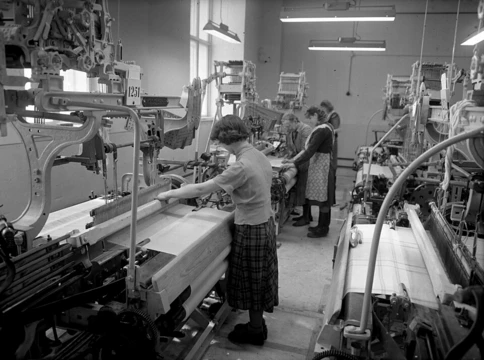
By the eve of the Industrial Revolution, the spinning wheel's limitations became a critical bottleneck: at least five spinners were needed to supply a single weaver, severely constraining overall cloth output. Lewis Paul and John Wyatt tackled this in 1738, patenting a Roller Spinning machine and a flyer-and-bobbin system that used two sets of rollers traveling at different speeds to draw wool to an even thickness and twist it efficiently. Despite the ingenuity, they achieved little financial success. In 1771, Richard Arkwright adapted the Roller Spinning machine and harnessed waterwheels to power looms for cotton cloth production, creating what became known as the water frame. These innovations laid the groundwork for the spinning jenny and spinning frame, which ultimately displaced the spinning wheel entirely. Modern industrial spinning machines now employ mechanical spindle rotation, automatic fibre draw-out, and multi-spindle configurations operating at speeds the hand-cranked wheel could never approach. The spinning wheel, once the backbone of textile production, became the foundation upon which the entire mechanized industry was built.
Gallery
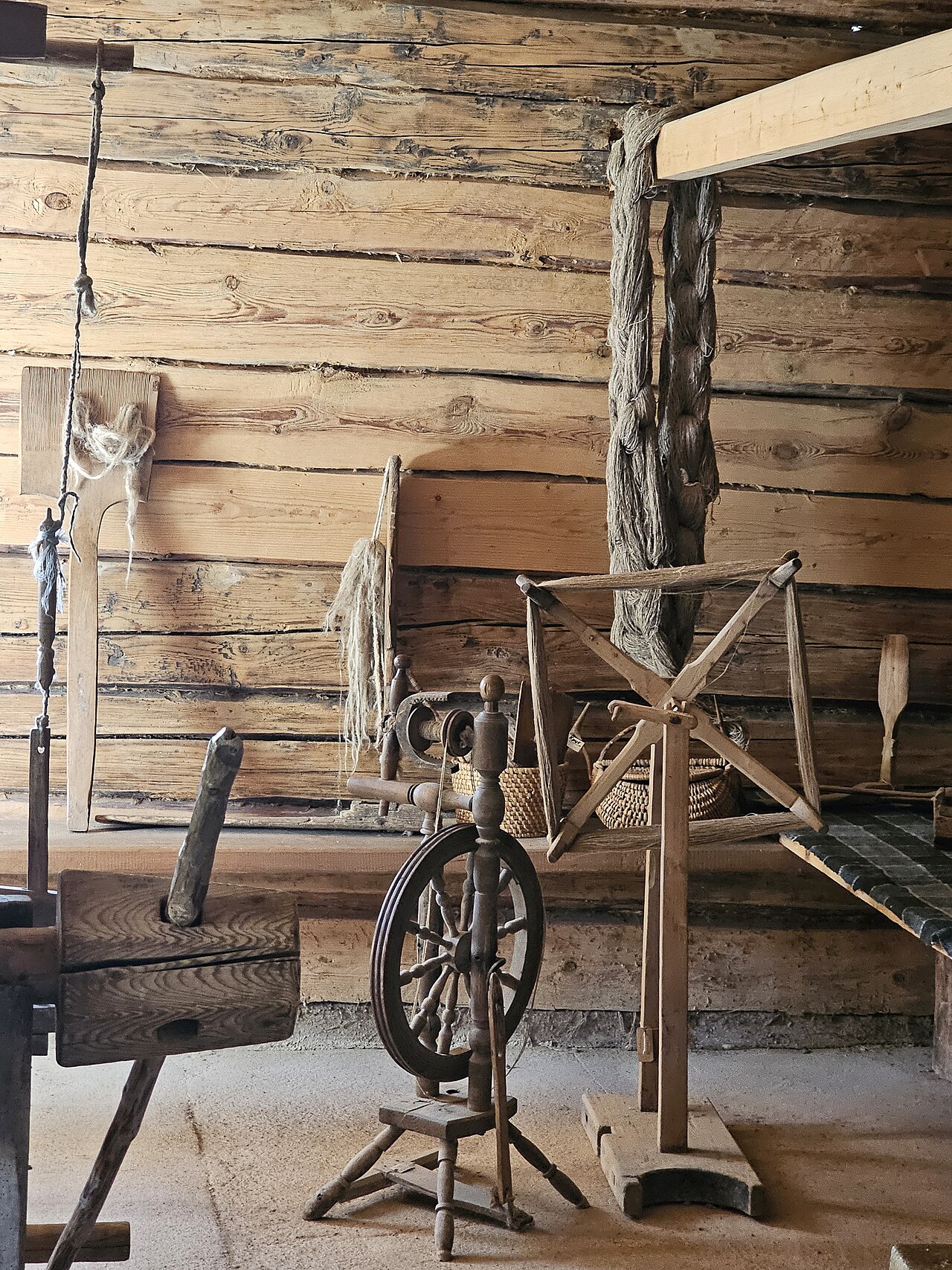
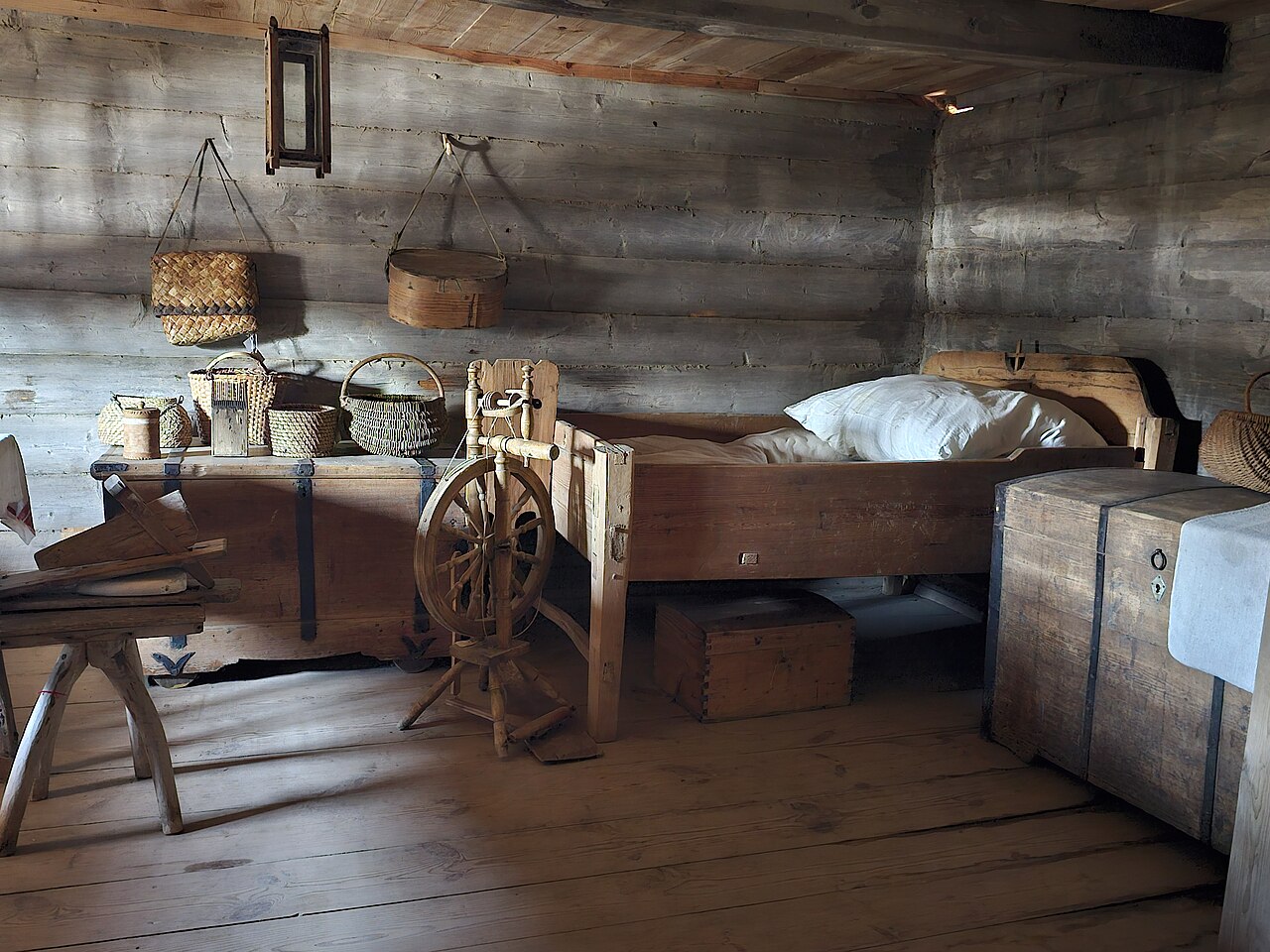
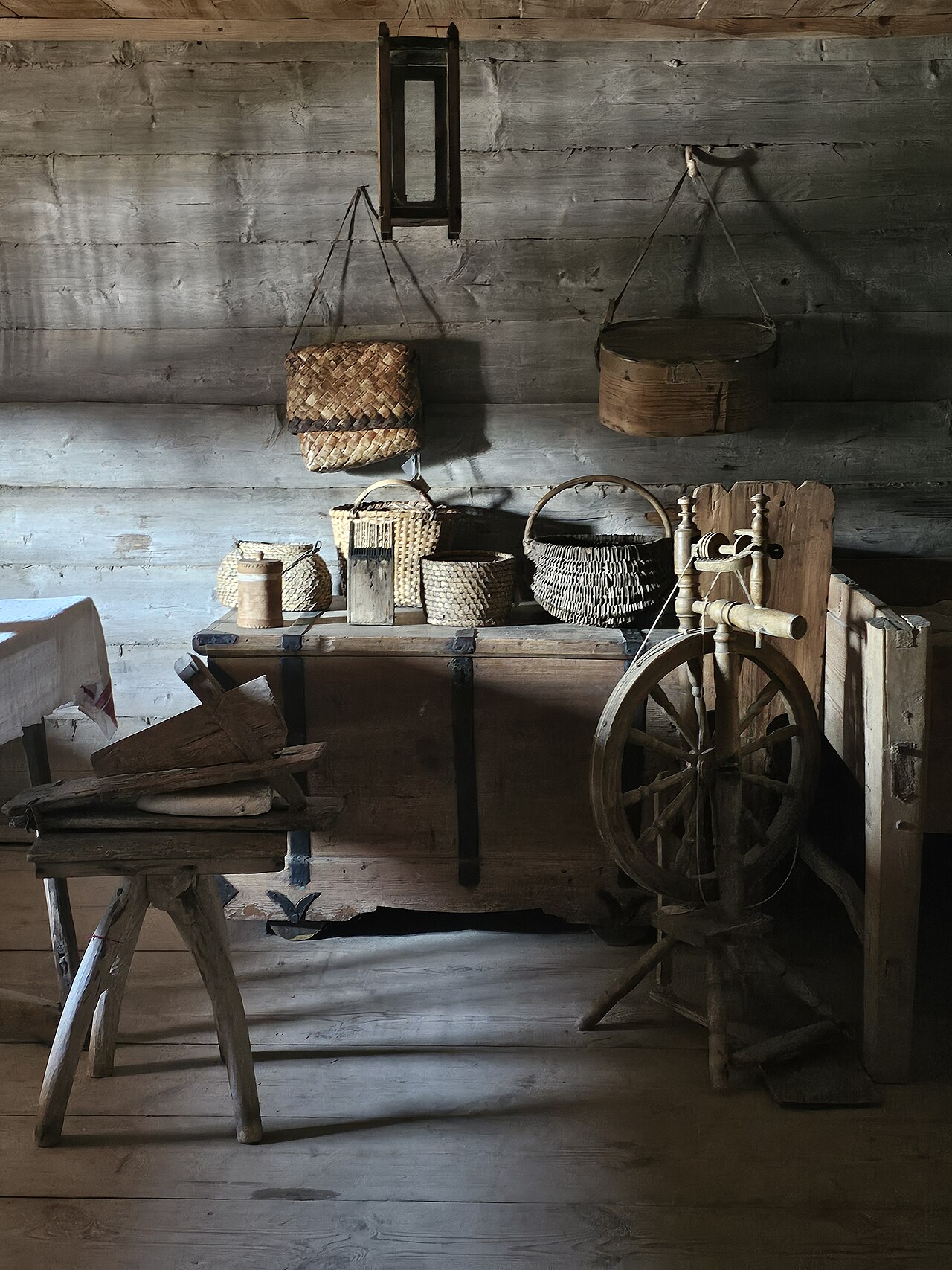
More in Textile Production 1-17
Spotted an error? Know more?
This is a living reference — every entry is fact-audited, and reader corrections feed straight into our audit queue. Suggest an edit · See this site's audit record