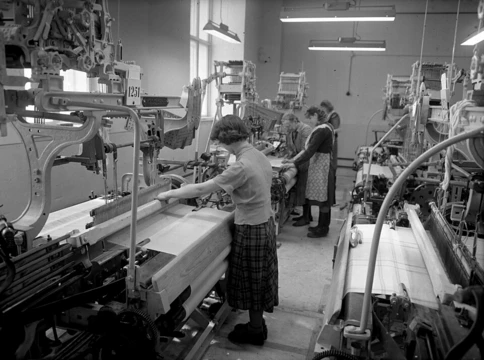
Textile printing
Applying color to fabric in patterns, bonded to resist washing.
Textile printing is the process of applying color to fabric in definite patterns or designs, with the color bonded to the fiber to resist washing and friction. It is related to dyeing but differs in that dyeing uniformly covers the whole fabric, while printing applies one or more colors only in certain parts, in sharply defined patterns. Wooden blocks, stencils, engraved plates, rollers, or silkscreens can be used to place colors on the fabric, and colorants are thickened to prevent spreading.
- field
- Textile printing
- known_for
- Applying color to fabric in patterns using techniques such as woodblock printing, resist dyeing, and discharge printing
- earliest_surviving_examples
- China, before 220 CE/AD
- introduction_to_Europe
- Via the Islamic world, about the 12th century
- practiced_by
- Incas of Peru, Chile, and Aztecs of Mexico before 1519
Lore & Background
On the continent of Europe, the commercial importance of calico printing was recognized almost immediately, and it spread and developed much more rapidly than in England, where it was neglected for nearly ninety years after its introduction. During the last two decades of the 17th century and the earlier ones of the 18th, new dye works were started in France, Germany, Switzerland, and Austria. Calico printing was first practiced in Scotland in 1738, and not until 1764 did Messrs Clayton of Bamber Bridge establish the first print-works in Lancashire. From an artistic point of view, most pioneer work in calico printing was done by the French, with productions from Jouy, Beauvais, Rouen, and Alsace-Lorraine representing the best in artistic calico printing.
Reader's Guide
Textile printing has been a significant method for decorating fabric for centuries, with roots in ancient China and later spreading to Europe via the Islamic world. Its importance lies in enabling the production of patterned fabrics for clothing, furnishings, and decorative items, distinct from uniform dyeing. The development of washable fabrics, particularly through Indian resist prints brought to Europe in the 17th century, greatly expanded its practical use. The industry grew rapidly on the European continent, while England lagged initially but eventually established major print-works in Lancashire. French printers, especially those in Jouy, Beauvais, Rouen, and Alsace-Lorraine, set artistic standards. The legacy of textile printing includes a variety of techniques—direct printing, mordant printing, resist dyeing, and discharge printing—that continue to influence modern industrial and artisanal fabric decoration. The process involves careful preparation of cloth and colors, with thickening agents preventing color spread, and fixing methods such as steaming ensuring durability.
Did You Know?
- The earliest surviving examples of textile printing from China date to before 220 CE/AD.
- The Incas of Peru, Chile, and the Aztecs of Mexico practiced textile printing before the Spanish Invasion in 1519.
- French printers in Jouy, Beauvais, Rouen, and Alsace-Lorraine were considered to represent the best in artistic calico printing.
- A dyehouse started by John Meakins in London was passed to his son-in-law Benjamin Ollive and remained in the family until 1823.
More in Textile Production 1-17
Spotted an error? Know more?
This is a living reference — every entry is fact-audited, and reader corrections feed straight into our audit queue. Suggest an edit · See this site's audit record