Textile
Fibre-based materials from clothing to geotextiles.
Textile is an umbrella term that includes various fibre-based materials, such as fibres, yarns, filaments, threads, and different types of fabric. Originally applied only to woven fabrics, the term now encompasses a diverse range of materials, including those made by knitting, non-woven methods, and other techniques. Textiles satisfy material needs for versatile applications, from daily clothing to technical uses like geotextiles, and are divided into consumer textiles (prioritizing aesthetics and comfort) and technical textiles (prioritizing functional properties).
- field
- Textile manufacturing and materials
- known_for
- Umbrella term for fibre-based materials including fabrics, yarns, and technical textiles
- earliest_evidence
- Dyed flax fibres in a cave in the Republic of Georgia dated to 34,000 BCE
- oldest_existing_example
- Banton Burial Cloth, the oldest existing example of warp ikat in Southeast Asia
- key_innovation
- Spinning jenny invented in 1765 in the United Kingdom
Lore & Background
Textiles themselves are too fragile to survive across millennia; the tools used for spinning and weaving make up most of the prehistoric evidence for textile work. The earliest tool for spinning was the spindle, to which a whorl was eventually added. Later, the spinning wheel was invented, though historians are unsure where—some say China, others India. The precursors of today's textiles include leaves, bark, fur pelts, and felted cloths. The first clothes, worn at least 70,000 years ago and perhaps much earlier, were probably made of animal skins. At some point, people learned to weave plant fibres into textiles.
Reader's Guide
Textiles have been central to human civilization, with evidence of textile-like materials dating to the Paleolithic era. The discovery of dyed flax fibres in a cave in the Republic of Georgia dated to 34,000 BCE suggests early textile production. The textile industry grew out of art and craft and was kept going by craft guilds. In the 18th and 19th centuries, during the Industrial Revolution, it became increasingly mechanized. In 1765, when the spinning jenny was invented in the United Kingdom, textile production became the first economic activity to be industrialized. In the 20th century, science and technology were driving forces. The textile and garment industries exert a significant impact on the economic systems of numerous countries engaged in textile production. For the main types of textiles—plain weave, twill, or satin weave—there is little difference between the ancient and modern methods, though the speed and scale of production have been altered almost beyond recognition by industrialization.
Did You Know?
- The word 'textile' comes from the Latin adjective textilis, meaning 'woven', which stems from texere, 'to weave'.
- Common cotton or blend garments such as t-shirts can last twenty years or more with regular use and care.
- The Banton Burial Cloth, displayed at the National Museum of the Philippines, is the oldest existing example of warp ikat in Southeast Asia.
- The spinning jenny, invented in 1765 in the United Kingdom, made textile production the first economic activity to be industrialized.
The Scope and Flow of Textile Manufacturing
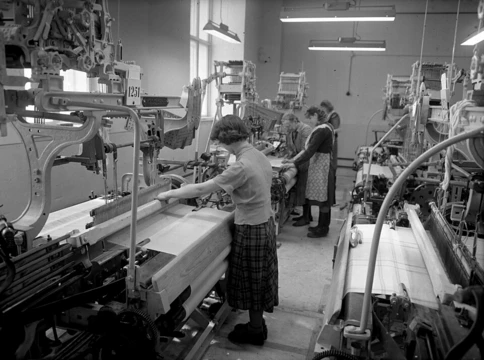
Textile manufacturing stands as one of the world's most significant industrial sectors, built around a fundamental transformation: raw fibre is converted into yarn, that yarn is woven or knitted into fabric, and the resulting cloth is then dyed, printed, and fabricated into a vast array of finished goods. The end products span personal clothing, household textiles, upholstery, and numerous industrial applications. While many fibre types feed into this pipeline, cotton dominates the natural-fibre segment, accounting for roughly ninety percent of all natural fibres processed in the industry. Consumers gravitate toward cotton garments and accessories largely for their comfort across varying climates. The sheer number of variable processes available at the spinning and fabric-forming stages, combined with the intricate finishing and colouration techniques, allows manufacturers to produce an extraordinarily wide range of final products from a relatively small set of raw materials.
From Household Craft to Global Industry
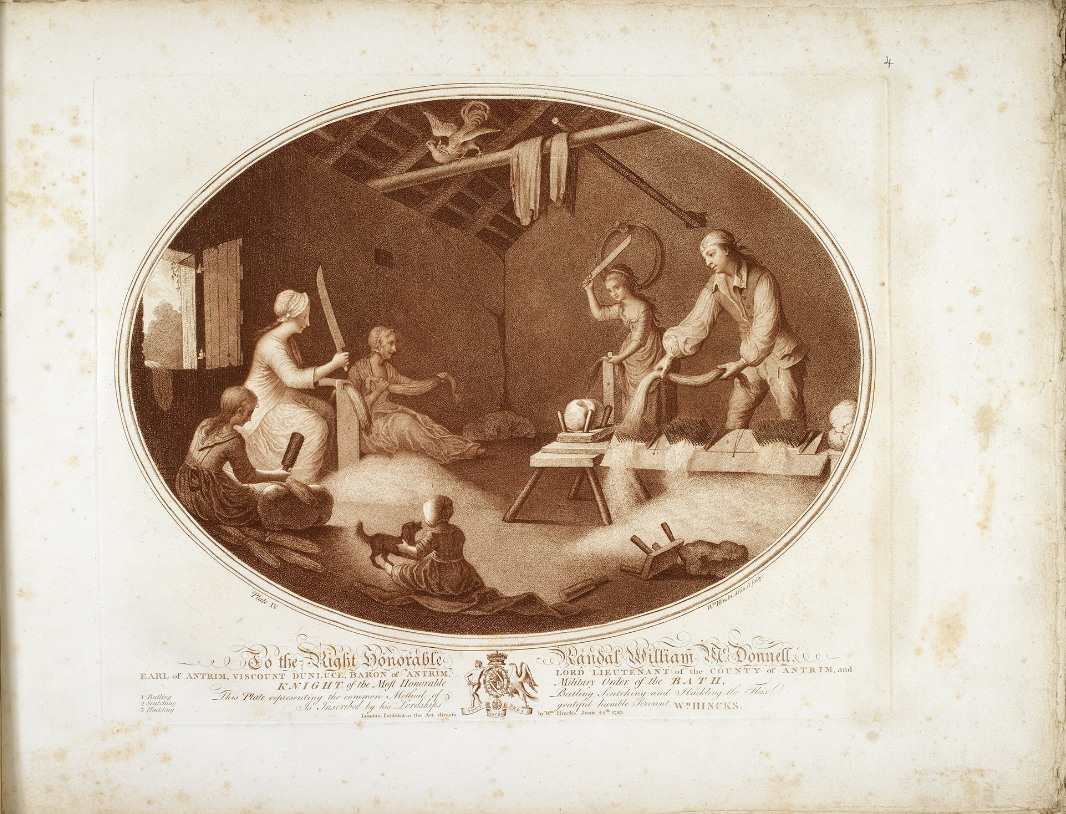
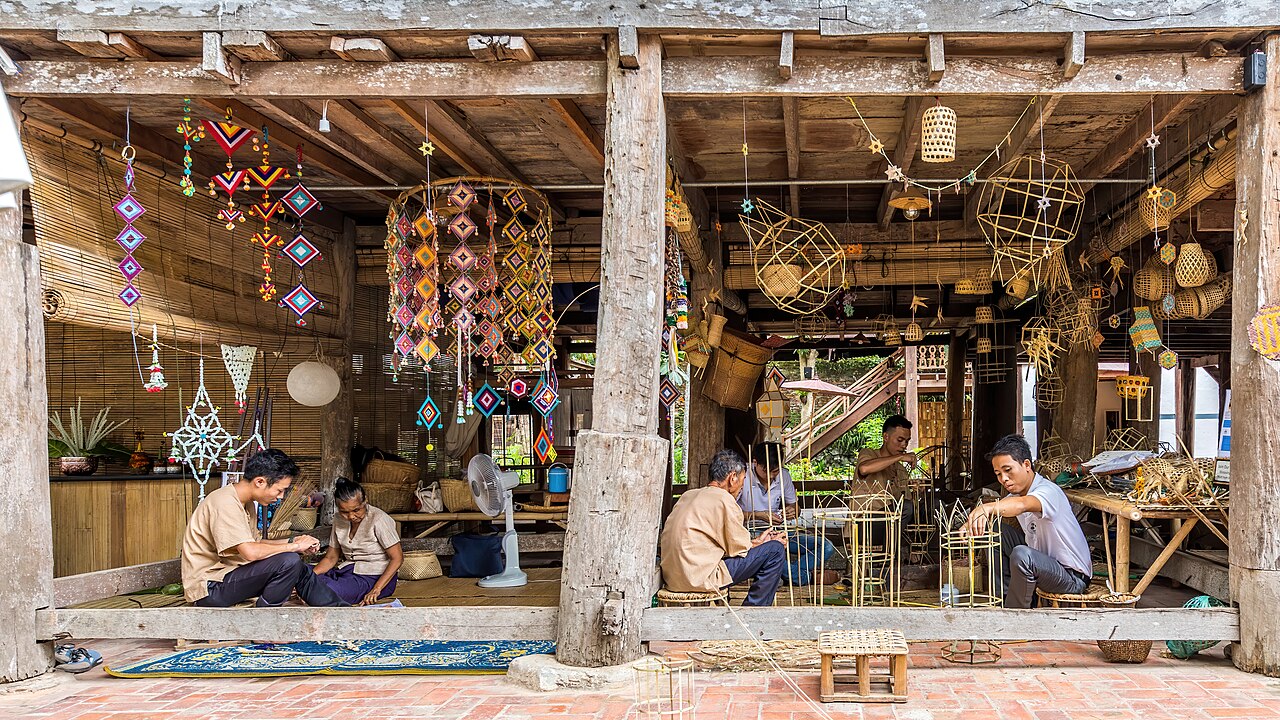
The textile industry did not emerge fully formed. For most of human history, the production of cloth was a domestic activity, a household craft passed down through generations. Ancient civilizations across India, Egypt, China, sub-Saharan Africa, Eurasia, South America, and both North and East Africa all developed their own forms of textile production long before any notion of industrial scale. The turning point came in the eighteenth and nineteenth centuries, when mechanization transformed what had been a manual, family-scale practice into a factory-based enterprise. Since the twentieth century, advances in science and technology have continued to reshape the sector. The intellectual foundations of the field were formalized early on; John Murphy's 'A Treatise on the Art of Weaving' is regarded as the first dedicated book on textile manufacturing, marking the moment when practical craft knowledge began to be codified into written, systematic instruction for a growing professional audience.
Cotton: Cultivation, Harvest, and Scale
Cotton holds the position of the world's most important natural fibre, and its cultivation is a truly global undertaking. In 2007, the global harvest reached twenty-five million tons, drawn from thirty-five million hectares of cultivated land spread across more than fifty countries. The crop thrives in regions offering long, hot, dry summers with abundant sunshine and low humidity. Two principal varieties serve different purposes: Indian cotton (Gossypium arboreum) yields a finer fibre but a staple length suited only to hand processing, while American cotton (Gossypium hirsutum) produces the longer staple that mechanized textile production demands. Planting typically runs from September through mid-November, with harvest occurring between March and June. Modern stripper harvesters and spindle pickers remove entire bolls from the plant. The scale of output is staggering; in 2013, a single Mississippi farmer, Bower Flowers, produced approximately thirteen thousand bales in one season—enough raw material to manufacture up to 9.4 million T-shirts.
From Raw Boll to Spinnable Yarn
The path from a harvested cotton boll to a spinnable strand involves a carefully sequenced series of mechanical operations. The first critical step is ginning, where either saw gins or roller gins separate the seeds and strip away dirt, stems, and leaves. The resulting lint is compressed into bales roughly 1.5 metres tall and weighing close to 220 kilograms, though only about a third of the original crop survives as usable fibre. The remaining by-products find their own markets: seeds are pressed into cooking oil, husks and meal become animal feed, and stems are processed into paper. At the mill, bales are broken open by spiked openers, then fluffed and cleaned in pickers using beater bars and rollers before emerging as soft, fleecy laps. Scutching, a process of beating cotton over parallel bars to expel seeds, was first mechanized in 1797 and became widely adopted in Manchester by 1816. Carding then aligns the fibres using progressively finer teeth on a series of rollers, producing a continuous sliver. Drawing frames subsequently combine multiple slivers into a single, higher-quality strand ready for spinning.
Gallery

More in Textile Production 1-17
Spotted an error? Know more?
This is a living reference — every entry is fact-audited, and reader corrections feed straight into our audit queue. Suggest an edit · See this site's audit record