Tapestry
Hand-woven textile art for figurative images, historically portable and prestigious.
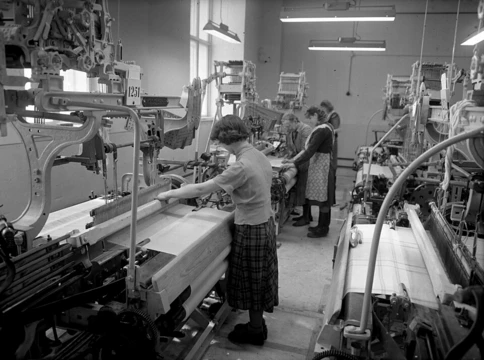
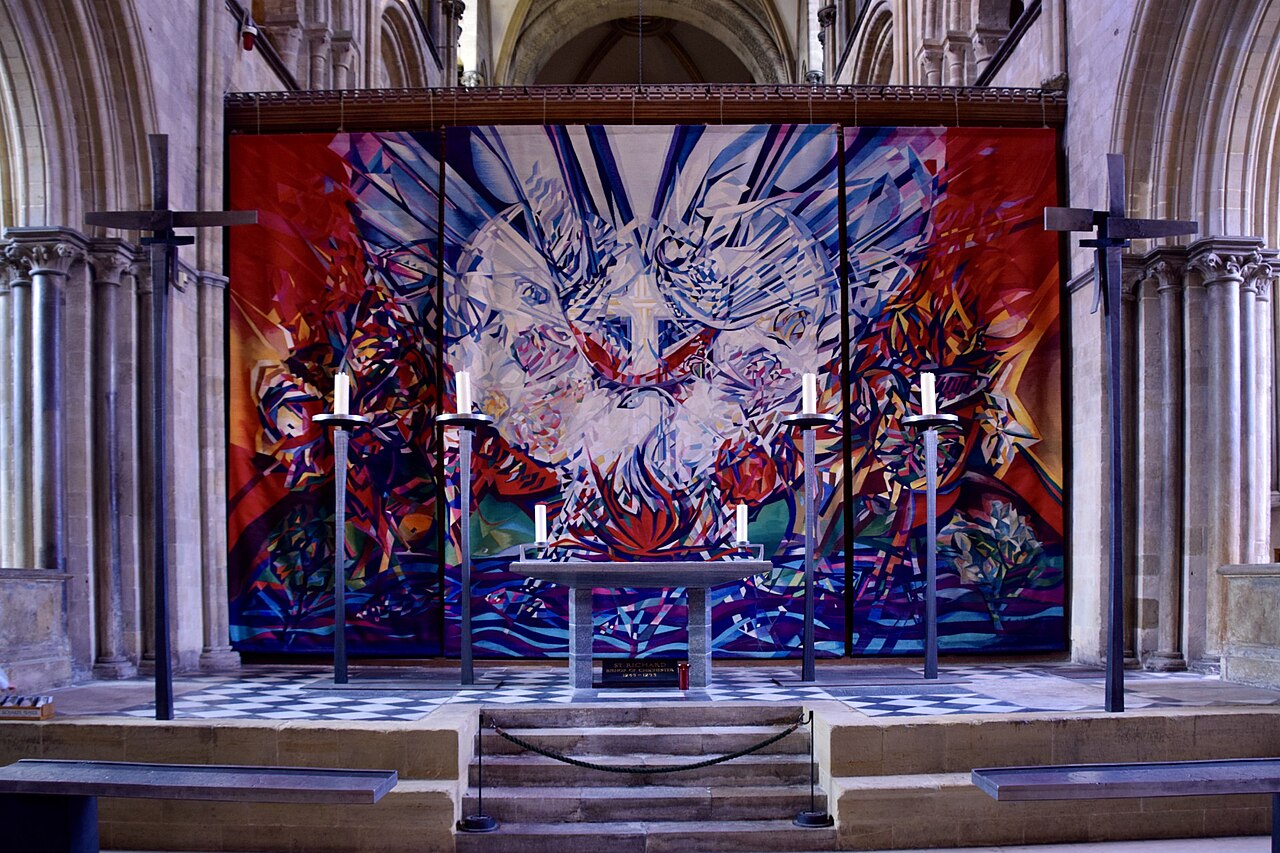
Tapestry is a form of textile art traditionally woven by hand on a loom, used to create images rather than patterns. In late medieval Europe, it was the grandest and most expensive medium for figurative two-dimensional images, retaining this position for many Renaissance patrons until at least the end of the 16th century. The European tradition continued to develop until the French Revolution and Napoleonic Wars, then revived on a smaller scale in the 19th century.
- field
- Textile art
- known_for
- Weft-faced weaving with hidden warp threads, used for wall hangings and furniture covers
- technique
- Plain weft-faced weave with discontinuous weft yarns
- materials
- Wool, linen, cotton, silk, gold, silver
- typical use
- Wall hangings, furniture covers, curtains, bed hangings, ceremonial canopies
Lore & Background
Production used upright 'high-warp' or horizontal 'low-warp' looms. The weaver always works on the back of the piece, following a full-size cartoon. Warp threads were normally wool in European industrial tapestries, but linen was often used in older or more artisanal settings. Weft threads were wool, with silk, silver, or gold thread in the most expensive pieces. Using silk might increase cost by four times, and adding gold thread increased it enormously, to perhaps fifty times that of wool alone.
Reader's Guide
Tapestry's significance lies in its role as a portable, prestigious medium for figurative art, especially in late medieval and Renaissance Europe. It served both decorative and practical functions, providing insulation in castles and palaces while displaying wealth and power. The success of decorative tapestry is partially explained by its portability—kings and noblemen could fold up and transport tapestries from one residence to another. Many kings had 'wardrobe' departments devoted to the care, repair, and movement of tapestries. In churches, they were displayed on special occasions. The largest and best tapestries were only displayed on special occasions to reduce wear and fading. Smaller pieces were made as furniture covers, cushions, curtains, and bed hangings. Over time, as paintings came to be regarded as more important works of art, tapestries in palaces were moved less and became more or less permanent fittings for particular rooms. The legacy of tapestry includes its technical complexity—a single weaver could produce a square yard of medium quality tapestry in a month, but only half that of the finest quality—and its influence on later revivals in the 19th century.
Did You Know?
- Tapestry is weft-faced weaving where all warp threads are hidden in the completed work.
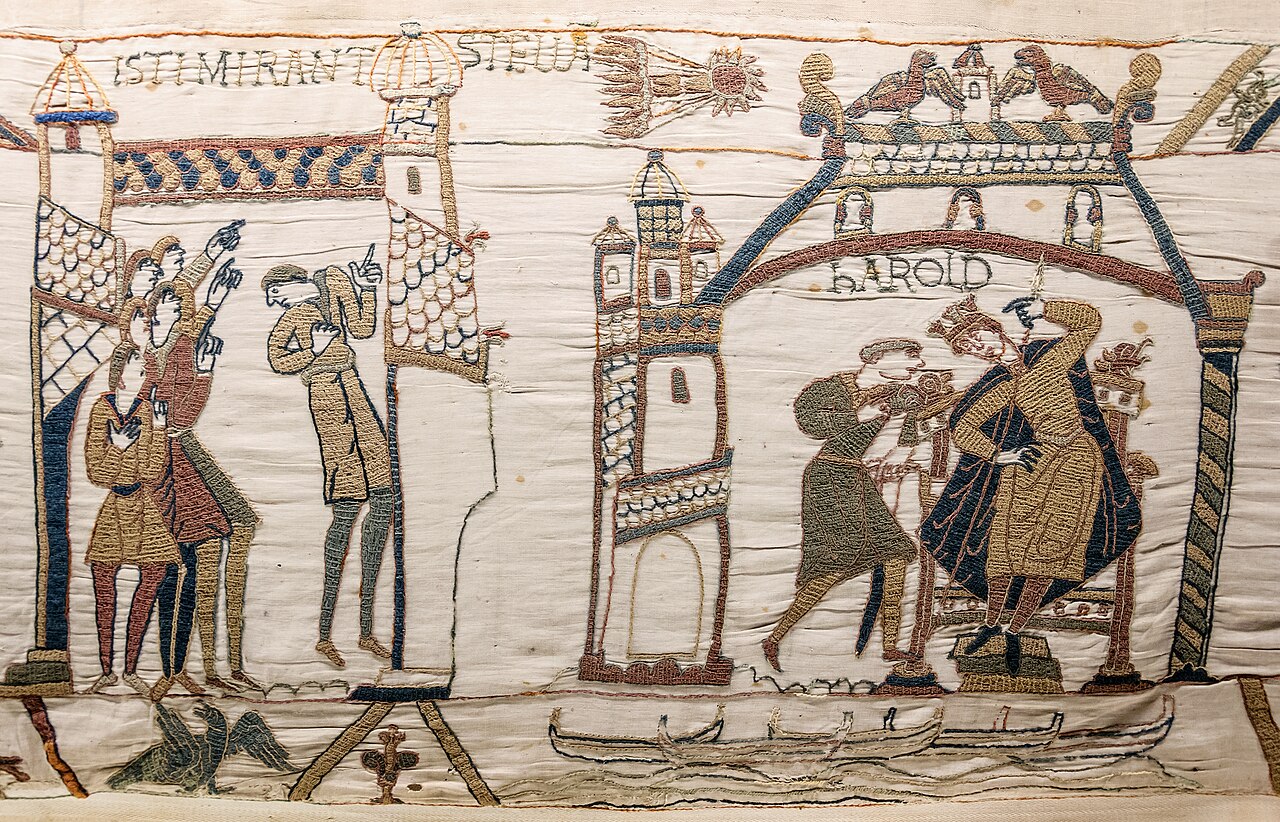
- The Bayeux Tapestry is actually embroidered, not woven as true tapestry.
- Using gold thread in a tapestry could increase the cost to perhaps fifty times that of wool alone.
- The earliest attested form of the word 'tapestry' is Mycenaean Greek ta-pe-ja, written in Linear B.
Physical Form and Artistic Mastery
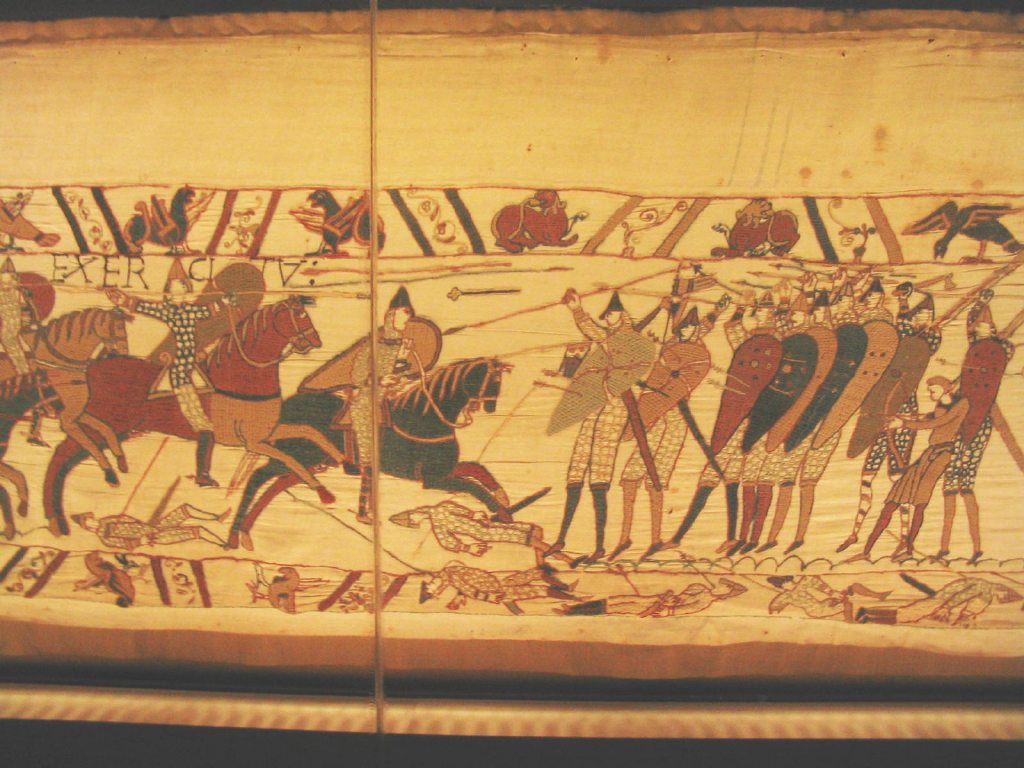
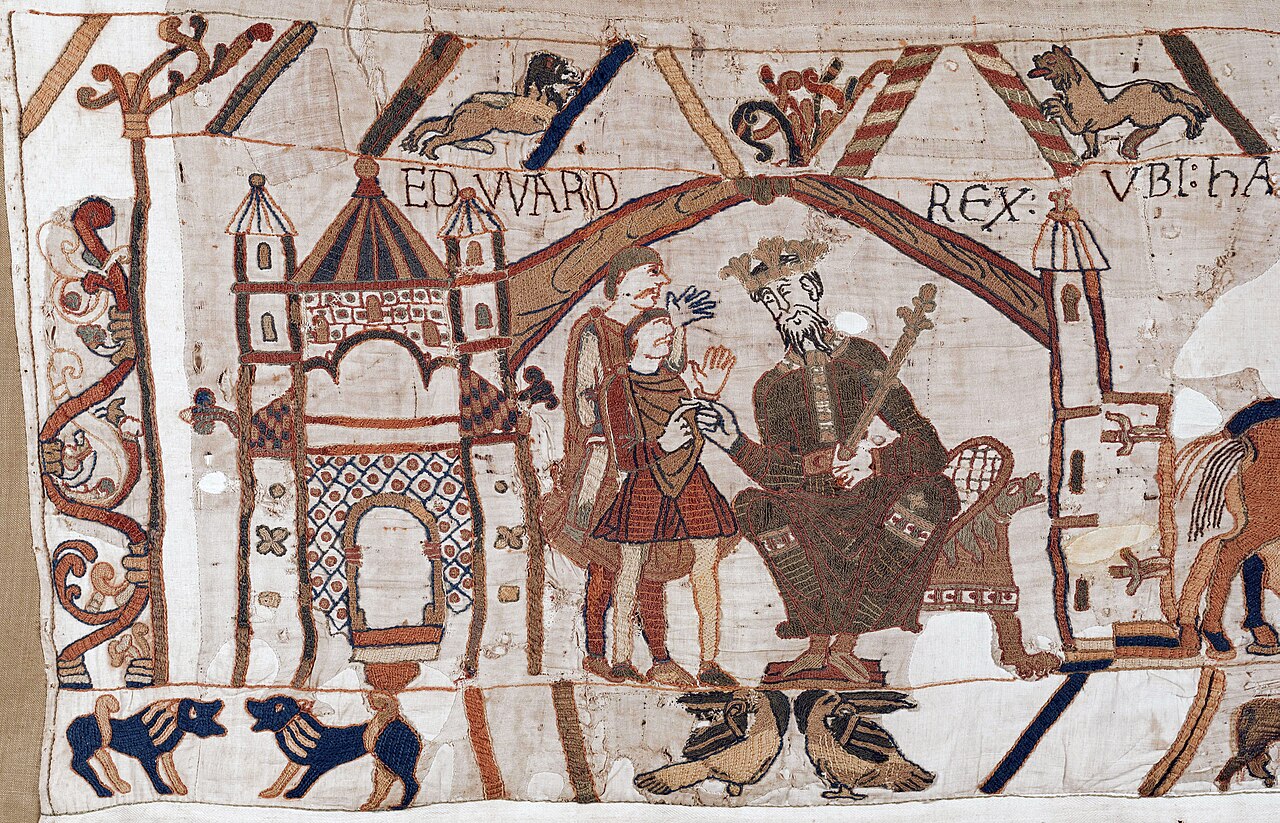
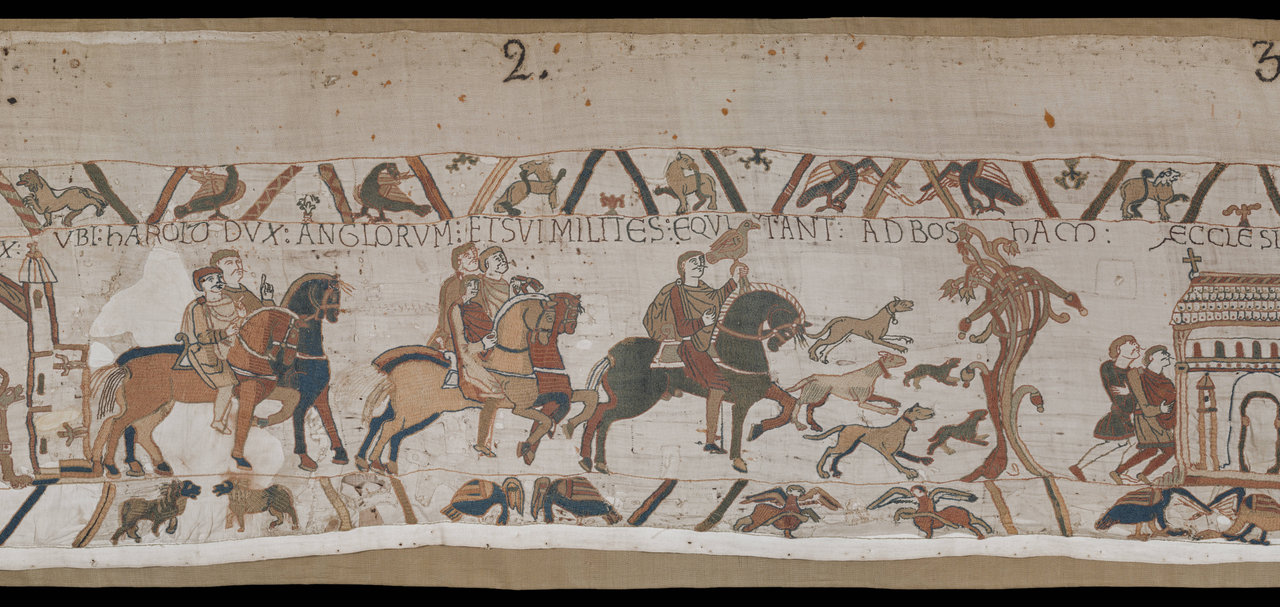
The Bayeux Tapestry is a remarkable embroidered cloth stretching nearly 70 metres in length and 50 centimetres in height, a scale that makes it exceptionally large even among medieval textiles. Far from being a woven tapestry in the technical sense, it is stitched entirely by hand onto linen using coloured woollen yarns, a distinction that places it outside narrower definitions of the craft. The work comprises 58 distinct scenes, each accompanied by Medieval Latin captions, and the deliberate choice to leave the background cloth unembroidered creates a broad, uncluttered field that allows the figures and ornamental details to leap forward with striking clarity. Conservator Sylvette Lemagnen has described the piece as one of the supreme achievements of Norman Romanesque art, marveling at how its colours retain a freshness and its workmanship an exquisiteness that seem almost miraculous after nearly nine centuries. The vegetable dyes used in the yarns are those traditionally associated with English cloth production, further anchoring the work in its Anglo-Saxon origins.
The Mystery of Its Creation
For centuries, French tradition credited Queen Matilda, William the Conqueror's wife, and her ladies-in-waiting with producing the tapestry, a belief so entrenched that the piece was sometimes called 'The Tapestry of Queen Matilda.' Modern scholarship, however, has largely shifted the credit to Bishop Odo of Bayeux, William's half-brother, who after the Conquest held the earldom of Kent and served as regent of England when his brother was in Normandy. Evidence supporting Odo's patronage includes the appearance of three of his Domesday Book followers within the scenes, the tapestry's discovery in the very cathedral he commissioned, and the possibility that it was finished by 1077 in time for the cathedral's dedication ceremony. The actual design and stitching, though, almost certainly took place in England. Howard B. Clarke has pointed to Scolland, abbot of St Augustine's Abbey in Canterbury, as a likely narrative architect, while Christine Grainge has floated the name of Archbishop Lanfranc. The physical needlework was most probably carried out by women, drawing on the celebrated Opus Anglicanum tradition. Janina Ramirez has even suggested that nuns at Barking Abbey in Essex may have been the hands behind the work, possibly as a gift to the new king.
Nine Centuries of Survival and Display
The earliest documented mention of the tapestry appears in a 1476 inventory of Bayeux Cathedral's treasures, yet the cloth had already weathered the violent Huguenot sack of Bayeux in 1562, an event that destroyed much of the town's heritage. After a gap in the written record, the next firm reference comes from 1724, when Antoine Lancelot relayed a report to the Académie Royale des Inscriptions et Belles-Lettres about a sketch depicting William the Conqueror, though he did not yet know the object's location or full identity. In 1729, scholars formally rediscovered the hanging, which by then was being displayed each year in Bayeux Cathedral. For centuries it remained a local treasure, eventually finding a permanent home at the Musée de la Tapisserie de Bayeux. That museum is currently closed for renovations, and the tapestry is set to travel to the British Museum in London from September 2026 through July 2027. If the dating to the 1070s holds, this will be the first time the work has been shown in England in possibly over nine hundred years.
A Political Narrative in Thread
The tapestry narrates the events surrounding the Norman Conquest of 1066, following William, Duke of Normandy, as he challenges Harold II for the English throne and ultimately prevails at the Battle of Hastings. Crucially, the story is told entirely from the Norman point of view, framing the conquest as the rightful triumph of the conquering side. This political framing has led scholars to debate not just who stitched the cloth but who conceived its overarching argument. Howard B. Clarke's case for Scolland as the guiding mind rests on his background in illumination, his travels to study Trajan's Column in Rome, and his personal connections to figures identified within the scenes. Andrew Bridgeford has taken a more provocative view, arguing that the English design conceals coded messages intended to undermine Norman authority. The Latin captions carry subtle Anglo-Saxon inflections, and the work may originally have hung in the hall of Odo's palace before being bequeathed to his cathedral, following the precedent of the lost hanging of the Anglo-Saxon warrior Byrhtnoth, given to Ely Abbey by his widow. In this way, the tapestry is as much a document of power and persuasion as it is a work of art.
Gallery
More in Textile Production 1-17
Spotted an error? Know more?
This is a living reference — every entry is fact-audited, and reader corrections feed straight into our audit queue. Suggest an edit · See this site's audit record